





Moving during winter in Northeast Wisconsin requires clearing walkways of snow and ice, protecting temperature-sensitive belongings like electronics and wood furniture, dressing in warm layers, and building extra time into your schedule. Green Bay averages 55.6 inches of snow per season, but a well-planned winter move can actually save you up to 30% compared to peak summer rates.
Whether you are moving across Green Bay, relocating from Appleton to De Pere, or heading to a new neighborhood in Ashwaubenon, this winter moving guide for Northeast Wisconsin covers everything you need for a safe and smooth cold-weather move. Below you will find practical tips on preparation, packing, safety, and why hiring professional movers in Green Bay makes a real difference when temperatures drop.
Key Takeaways
- Save up to 30% on moving costs by choosing a winter move, since only about 10% of all moves happen during winter months (American Moving and Storage Association)
- Green Bay averages 55.6 inches of snow per season (Wisconsin State Climatology Office), so clearing walkways and salting driveways is essential for every winter move
- Electronics, wood furniture, glass, and houseplants need extra insulation and should never sit in an unheated truck overnight
- Hiring licensed, insured professional movers with winter experience significantly reduces the risk of injuries and property damage on icy moving days
- Slips, trips, and falls are the most common winter health hazard in Wisconsin according to the Wisconsin Department of Health Services, making walkway preparation critical
Why Do People Move in Winter in Northeast Wisconsin?
Winter is the off-season for the moving industry, and that works in your favor. According to a 2023 survey cited by USA Today, only 12% of people made their most recent move during winter. That low demand means better pricing, more flexible scheduling, and easier access to experienced moving crews in Green Bay, Appleton, and surrounding communities.
How Much Can You Save with an Off-Season Move?
Moving during winter months can cut your costs significantly. Data from the American Moving and Storage Association shows that only 10% of all moves happen in winter, which drives prices down across the board. Industry reports indicate that winter movers can save 20% to 40% compared to peak summer rates, with January and February offering the deepest discounts.
Those savings extend beyond the moving crew itself. Rental truck companies, storage facilities, and even real estate markets tend to offer better deals during the colder months. If you are exploring your options, our guide to the best time of year to move (https://greenbaymovingco.com/when-is-the-best-time-of-the-year-to-move/) breaks down the cost differences season by season.
Michael Graham, owner of Dow Moving, puts it this way: “Winter moving can be challenging due to weather, limited daylight, and holiday schedules, but with proper planning and professional support, it does not have to be stressful.”
Is There Less Competition for Housing and Movers in Winter?
Yes. With fewer people searching for homes and apartments during winter, you face less competition. Landlords and sellers may be more willing to negotiate on price or terms. On the moving side, companies have lighter schedules, which means you are more likely to book your preferred date and get an experienced crew. In peak season, movers in Green Bay can be booked 6 to 8 weeks out. During winter, scheduling is often available within days.
What Are the Biggest Challenges of a Winter Move in Green Bay and Appleton?
Northeast Wisconsin winters are no joke. The National Weather Service reports that the region averages 40 to 50 inches of snow each season, with Green Bay specifically averaging 55.6 inches based on 1991-2020 climate normals. For the 2025-26 season, FOX 11 Chief Meteorologist Patrick Powell forecasted 60 to 75 inches of snow and below-average temperatures, calling it potentially the coldest winter in about 10 years.
Snow, Ice, and Below-Freezing Temperatures
Wisconsin experiences an average of 3 to 6 winter storms per season according to ReadyWisconsin. The Wisconsin Department of Health Services warns that winter storms can bring extremely cold temperatures, high winds, heavy snow, icy roads, power outages, and loss of phone and internet services. For movers, ice on walkways and driveways creates serious slip-and-fall hazards for anyone carrying heavy items.
Paula Tran, State Health Officer and Administrator for the Wisconsin Department of Health Services, advises: “Getting ready for snow and bitter cold before they hit can help prevent trips to the emergency room and it might even save a life.” That preparation is just as important on moving day as any other winter day.
Shorter Daylight Hours and Unpredictable Storms
During December and January in Green Bay, the sun sets before 4:30 PM, giving you limited daylight to complete your move. Winter storms can also arrive quickly and change conditions within hours. The National Weather Service in Green Bay issues Extreme Cold Warnings when wind chills drop to -30°F or lower, and at those temperatures, frostbite can develop on exposed skin in as little as 15 minutes.
Dr. Megan Butler, Family Medicine Physician at Prevea Plymouth Health Center in Green Bay, recommends layering up with wool and fleece fabrics and covering all skin and extremities. She adds that if you experience any symptoms that could be caused by the cold, you should seek medical attention right away.
How Do You Prepare Your Home for a Winter Move?
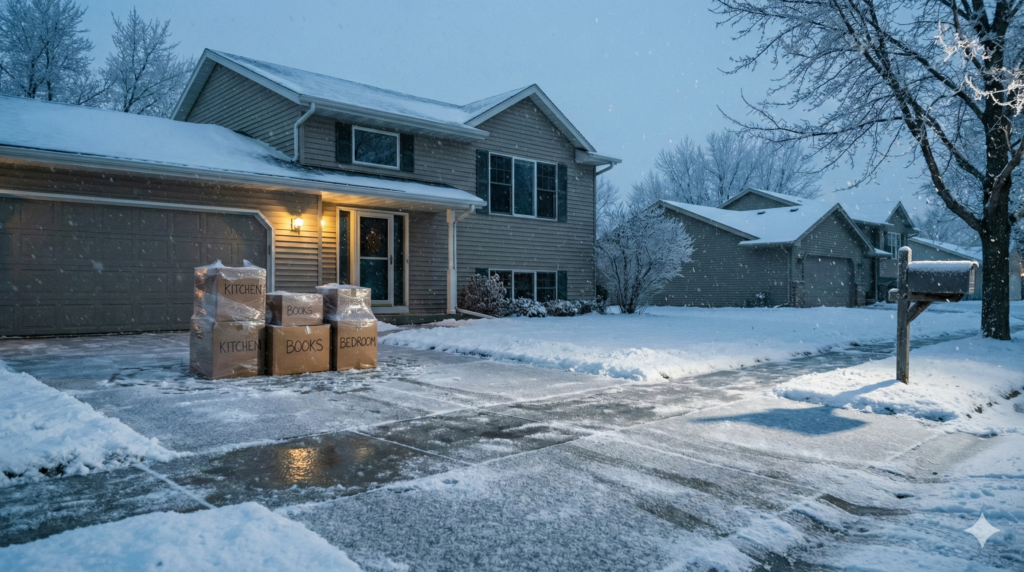
Preparing both your current and new home before moving day is one of the most important steps in a successful winter move in Northeast Wisconsin. A clear, safe path from your front door to the moving truck prevents injuries and keeps the process running on schedule. Use our complete moving checklists (https://greenbaymovingco.com/moving-checklists/) alongside this winter-specific preparation guide.
Clear Driveways, Walkways, and Entry Points
Follow this step-by-step winter home prep checklist the day before and morning of your move:
- Shovel all snow from driveways, walkways, porches, and steps at both your old and new home
- Apply salt or ice melt generously to every surface where movers will walk, especially on steps and ramps
- Check that the moving truck has a clear, level parking spot as close to the entrance as possible
- Lay down waterproof mats, cardboard, or plastic tarps at all entry points to catch tracked-in snow and slush
- Confirm that outdoor lighting works at both locations, since you may be loading or unloading in the dark
- Designate one heated room with the door closed as a warm-up space for the crew and your family
- Keep shovels, extra salt, and a broom accessible throughout the day in case conditions change
Protect Floors and Carpeting from Slush and Salt
Snow, slush, and road salt tracked indoors can damage hardwood floors, tile, and carpeting in minutes. Use plastic sheeting or floor runners along the main path from the front door to the rooms where furniture and boxes will be placed. Keep a stack of old towels near each doorway so movers can wipe down wet shoes or boots between trips. This simple step protects your floors and keeps conditions safer for everyone.
Which Belongings Need Cold-Weather Protection During a Winter Move?
Cold temperatures can damage household items that seem perfectly sturdy in warmer weather. According to Armstrong Moving, damage claims increase by nearly 30% during winter months, with moisture-related issues being the primary cause. When electronics or furniture move quickly from cold to warm environments, condensation can form inside, leading to corrosion, short circuits, or warping. Review our packing and organizing tips from our crew (https://greenbaymovingco.com/packing-organizing-tips-from-our-crew/) for additional guidance on protecting your items.
Winter Moving Protection Guide by Item Type
| Item Type | Risk in Cold | Protection Method |
| Electronics (TVs, laptops, game consoles) | Condensation causes corrosion and short circuits when brought into warmth | Wrap in thermal blankets, add silica gel packs, let acclimate 2-3 hours before powering on |
| Wood Furniture | Warping, cracking from temperature fluctuations and moisture | Apply wax 1-2 weeks before move, wrap in industrial plastic wrap or moving blankets |
| Glass and Ceramics | Becomes brittle in freezing air, prone to cracking | Double-wrap in bubble wrap and packing paper, transport in your heated vehicle if possible |
| Musical Instruments | Wood expands/contracts, risk of cracks; ideal humidity is 40-55% | Use humidifiers in cases, wrap in insulated bags, maintain climate-controlled transport |
| Houseplants | Cold shock can kill plants within minutes of exposure | Place in bags for insulation, transport in your heated car, never leave in the truck |
| Sealed Glass Containers / Liquids | Liquids expand when frozen, shattering glass containers | Transport in heated vehicle, wrap individually in bubble wrap, avoid packing in unheated areas |
| Large Appliances (washer, fridge) | Water in hoses and components can freeze, causing cracks | Drain all water completely, clean and dry interior, secure moving parts with transit bolts |
Electronics and Appliances
Electronics are among the most temperature-sensitive items in any winter move. Use original boxes whenever possible, as they are built to fit and protect each device. Add silica gel packs to absorb trapped moisture, and wrap items in thermal or moving blankets for insulation. The most important rule: never power on electronics immediately after bringing them indoors. Let them acclimate to room temperature for at least 2 to 3 hours to prevent internal condensation damage.
Wood Furniture, Glass, and Musical Instruments
Wisconsin Management, a property management company familiar with Wisconsin winter moves, notes that glass, certain mattresses, and fragile items are especially vulnerable to damage from extreme cold. For wood furniture, applying a coat of wax 1 to 2 weeks before your move adds a protective moisture barrier. Wrap each piece in industrial plastic wrap or moving blankets before carrying it outdoors, and avoid stacking wood pieces directly against each other in the truck.
Houseplants and Liquids
Houseplants should always travel in your personal heated vehicle during a winter move. Even a few minutes of exposure to sub-zero Northeast Wisconsin air can cause irreversible cold shock. Place plants in plastic bags for extra insulation and keep them away from drafts or direct contact with cold car windows. For sealed glass containers or liquids, transport them in a climate-controlled space. Liquids can expand and shatter glass when frozen, creating a mess and safety hazard.
What Should You Pack in a Winter Moving Day Essentials Kit?
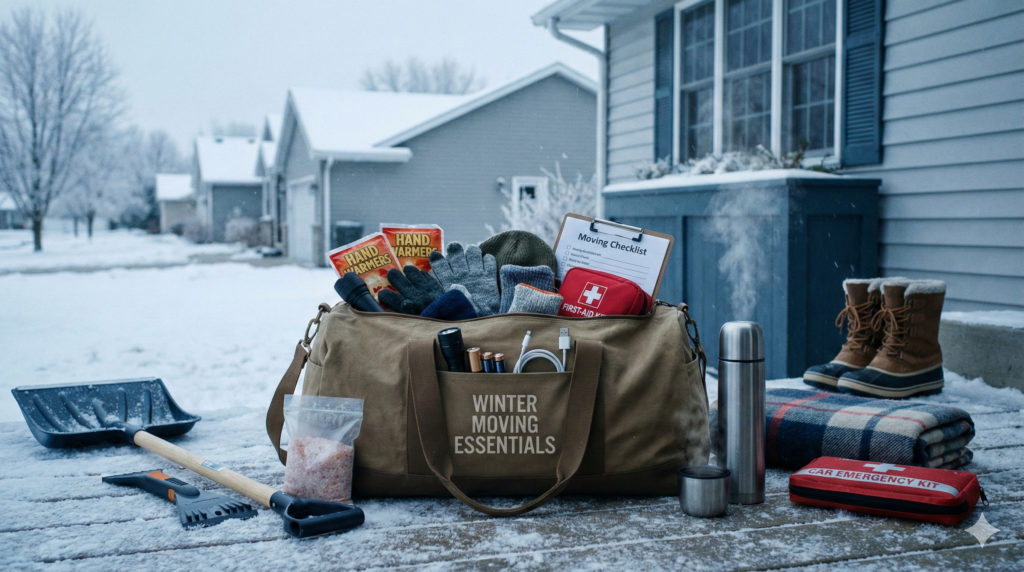
A winter essentials kit keeps you prepared for anything the weather throws at you on moving day in Northeast Wisconsin. Pack these items in a bag that stays with you and not on the truck. Keep your moving day prep checklist (https://greenbaymovingco.com/how-to-prep-for-moving-day-a-simple-checklist/) handy alongside this kit.
- Snow shovel, ice scraper, and a bag of rock salt or ice melt
- Hand warmers and foot warmers for you and the crew
- Extra gloves, hats, and warm socks (have backup pairs in case they get wet)
- Waterproof slip-resistant boots
- Towels for wiping down wet surfaces, shoes, and items
- Thermos of hot coffee, cocoa, or cider to keep spirits high
- Flashlight and extra batteries for early-dark conditions
- First aid kit with supplies for slips or falls
- Car emergency kit: blankets, jumper cables, flashlight, water, snacks
- Phone charger and list of emergency contacts including your moving company
How Do You Stay Safe on Moving Day in Northeast Wisconsin?
Safety is the top priority for any winter move. The Wisconsin Department of Health Services identifies slips, trips, and falls as the most common winter health hazard in the state. Snow-covered or icy sidewalks cause people to fall and injure themselves every winter, and that risk increases when you are carrying heavy boxes and furniture. Taking the right precautions protects you, your family, and your moving crew.
Dress in Layers and Wear Slip-Resistant Boots
Dr. Megan Butler of Prevea Plymouth Health Center in Green Bay recommends dressing in multiple layers using wool and fleece fabrics to insulate and trap heat. Waterproof, slip-resistant boots are non-negotiable. Keep multiple pairs of gloves on hand because wet gloves lose their warmth quickly. If you start to feel numbness, tingling, or see grayish-white skin on your fingers or face, move indoors immediately. Those are early signs of frostbite.
Winterize Your Vehicle and Pack an Emergency Kit
Before moving day, get your vehicle serviced. Top off antifreeze and windshield washer fluid rated for cold temperatures. Confirm that wipers, defrosters, and heaters are working properly. In Wisconsin, icy road conditions are responsible for an average of 50,000 vehicle accidents and 45 deaths each winter according to the Wisconsin Department of Health Services Winter Weather Toolkit. Keep an emergency kit in your car with blankets, water, non-perishable snacks, a flashlight, and a phone charger.
Schedule an Early Start and Build in Extra Time
Start your winter move as early as daylight allows to maximize the hours of visibility you have. In December and January, Green Bay sees sunset before 4:30 PM, so every hour of morning light counts. Build at least 1 to 2 extra hours into your timeline to account for slower loading on icy surfaces, warming breaks for the crew, and potential weather changes. If the forecast calls for a major storm, communicate with your movers immediately. Rescheduling is always safer than risking injuries or damage.
Tim Halbach of the National Weather Service explained the simplified cold alert system: “Instead of using separate terms like Extreme Cold and Wind Chill warnings to describe similar cold conditions, they will now use just one: Extreme Cold Watch, Warning, or Advisory.” Monitor these alerts closely leading up to and during your move. You can check conditions at weather.gov/grb or tune into NOAA Weather Radio, which broadcasts 24 hours a day.
The Federal Motor Carrier Safety Administration (FMCSA) also recommends verifying that any moving company you hire is properly licensed and insured. You can confirm a mover’s registration at ProtectYourMove.gov (https://www.fmcsa.dot.gov/protect-your-move-toolkit). This is especially important for winter moves, where weather-related delays and complications can arise.
Ready for a Stress-Free Winter Move in Green Bay?
Moving during winter in Northeast Wisconsin does not have to be overwhelming. With the right preparation, proper protection for your belongings, and a focus on safety, your winter move can be smooth, efficient, and even more affordable than a summer relocation. The key is planning ahead and working with a team that knows the local conditions.
Green Bay Moving Co. is a licensed and insured local moving company serving Green Bay, Appleton, De Pere, Allouez, Ashwaubenon, Howard, Suamico, and surrounding Wisconsin communities. Our crew has the experience and equipment to handle winter moves safely, from protecting your floors and belongings to navigating icy driveways with care. Explore our local guides for Wisconsin families (https://greenbaymovingco.com/local-guides-for-wisconsin-families/) for more helpful moving resources.
Ready to plan your winter move? Contact Green Bay Moving Co. today for a free quote. Let’s make your next move a smooth one, no matter what the weather brings.