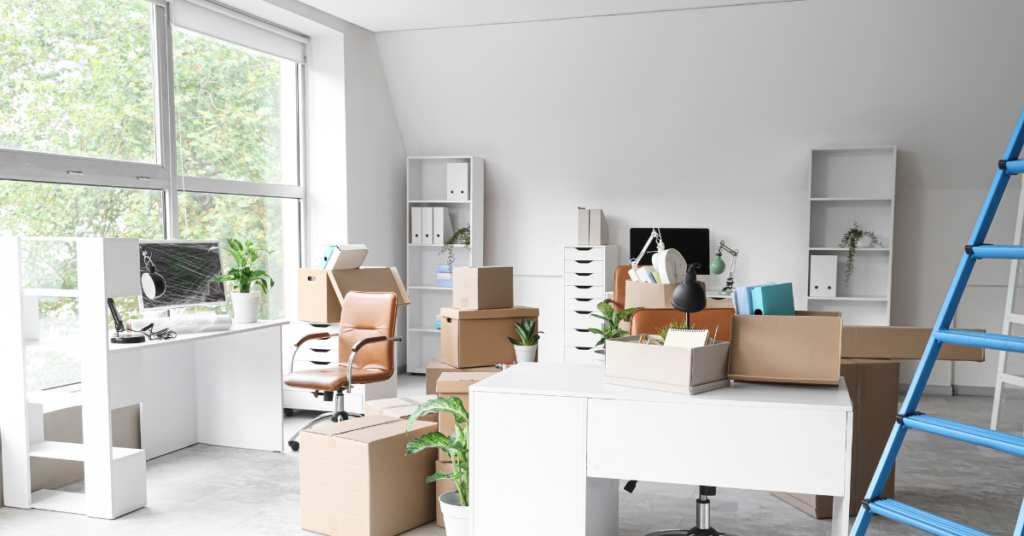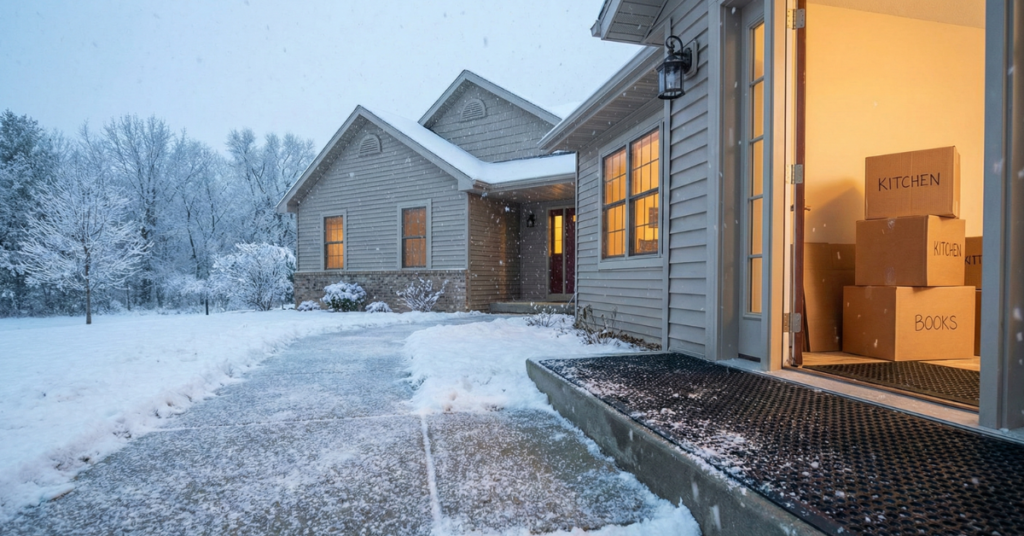






The best unpacking strategy is to open your essentials box first, then set up the bedroom, bathroom, and kitchen before anything else. Tackle one room at a time in that exact order, and you will have a fully functional home within 2 to 3 days — even if the rest of your boxes take a few more weeks to sort through.
Key Takeaways
- Start with your essentials box — toiletries, bedding, phone charger, and basic kitchen items — before opening anything else.
- Unpack in priority order: bedroom first, then bathroom, then kitchen, then living areas.
- Research shows Americans take an average of 182 days to finish unpacking their last box — a clear strategy cuts that down dramatically.
- Complete one room fully before opening boxes in another to avoid clutter spreading across your home.
- Decor, books, guest bedrooms, and storage areas can wait until Week 2 or later without any impact on daily life.
What Is an Unpacking Strategy and Why Does It Matter?
An unpacking strategy is a priority-based plan that tells you which boxes to open first, which rooms to set up before others, and which items can safely wait. Without one, most people open boxes randomly, scatter belongings across multiple rooms, and end up living in organized chaos for weeks.
The Real Cost of Unpacking Without a Plan
According to research shared by Gardner Moving, Americans take an average of 182 days to unpack their last box after moving into a new home. That is six full months of stepping around boxes, losing track of belongings, and never quite feeling settled.
The problem is not the volume of stuff. It is the lack of a clear order. When you know what to open first, you eliminate decision fatigue and get your home functional fast.
| “The biggest mistake people make when unpacking is trying to do everything at once. Pick your most important rooms, finish them completely, then move on. That sense of completion in one space gives you energy for the next.”— Stephanie Bennett, Certified Professional Organizer and Founder of Simply Placed, Seattle, WA |
How a Priority-Based Order Saves Time and Stress
A good unpacking order is built around your daily survival needs first — sleep, hygiene, food — and then your comfort and routines. Think of it in three tiers:
- Tier 1 (Day 1): Essentials box, bedroom, bathroom
- Tier 2 (Days 2-3): Kitchen, kids’ rooms, home office if needed
- Tier 3 (Week 1-2): Living room, storage, decor, non-essential spaces
Following this sequence means you will always have what you need, even if boxes are still stacked in the hallway.
What Should You Unpack on Moving Day (Day 1)?
Moving day is exhausting. By the time your Green Bay movers pull away from the truck, your energy is running low and your new home feels nothing like home yet. Day 1 unpacking has one goal: make sure you can sleep, shower, and eat before tomorrow.
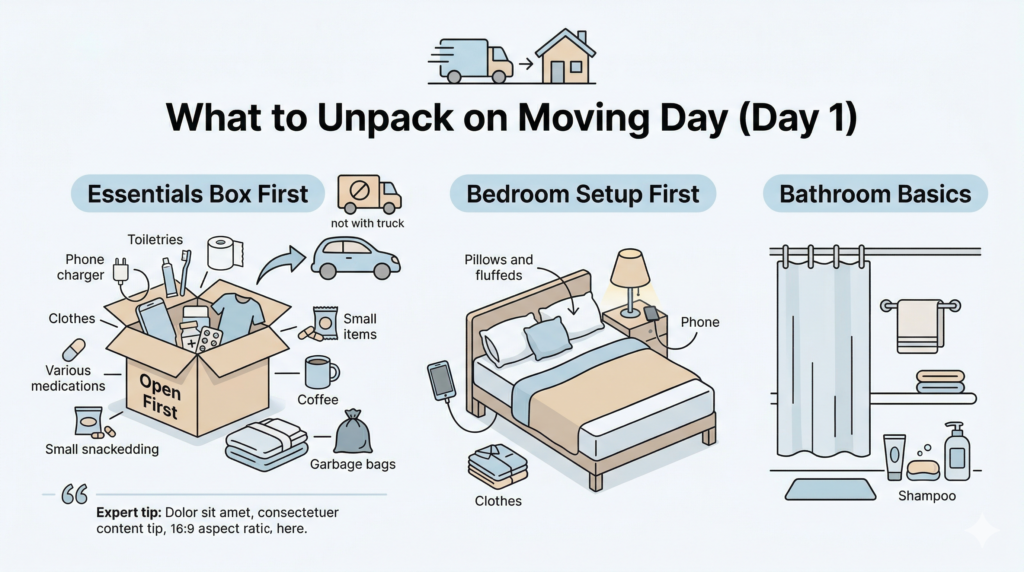
Your Essentials Box: The First Box You Open
The single most important thing you can do before moving day is pack a dedicated essentials box — or as our team likes to call it, your open-first box. This box travels in your car, not the moving truck, and it comes inside first.
Your essentials box should include:
- Phone chargers and power bank
- Toiletries: toothbrush, toothpaste, soap, shampoo, deodorant
- Toilet paper and paper towels
- A change of clothes for the next morning
- Medications and any daily supplements
- Basic kitchen items: coffee maker, mugs, one pot, paper plates, utensils
- Snacks and easy food items
- Bedding for each person: sheets, pillows, a blanket
- Garbage bags for packing materials
Allied Van Lines recommends creating a dedicated bag like this for each family member individually, especially when traveling with kids or pets. Treat it the same way you would pack for a weekend trip — everything you need to function for 48 hours.
| “I tell every client the same thing: if you do nothing else before your move, pack that one box like your life depends on it. Because on moving day, it basically does. That box is the difference between a stressful night and a manageable one.”— Marcus Delgado, Senior Moving Consultant and Relocation Specialist, 14 years of industry experience |
Bedroom First: Why Sleep Comes Before Silverware
Once your essentials box is inside, go straight to the bedroom. Set up the bed frame if needed, lay down the mattress, and make the bed with sheets and pillows before you do anything else. This is non-negotiable.
After a full day of moving, you need somewhere to collapse. Knowing your bed is ready removes the biggest source of end-of-day stress. Beyond the bed itself, you only need to unpack:
- A lamp or bedside light
- Chargers within reach of the bed
- Enough clothing for the next 2 to 3 days
- Curtains or blinds if privacy is needed
Do not try to organize your full closet or unpack every clothing box on Day 1. That can wait until Day 2 or 3. Tonight, you just need to sleep.
Bathroom Basics Before Bed
After the bedroom, spend 15 to 20 minutes on the bathroom. Hang the shower curtain, put out your towels, and set up toiletries from your essentials box. Stock enough to get through the next morning comfortably.
A functional bathroom on Night 1 matters more than people realize. After the physical effort of moving day, a shower is both practical and genuinely restorative. Make sure you have it ready before you sit down to rest.
What to Unpack on Days 2 and 3: Getting Your Home Functional
With sleep and hygiene handled, Days 2 and 3 are about building real daily functionality. The kitchen becomes your primary focus, followed by any other spaces your household needs to operate smoothly.
The Kitchen: Your Most Important Room to Set Up
Professional organizers consistently rank the kitchen as the room to fully unpack first, after the bedroom and bathroom are ready. The faster your kitchen works, the less money you spend on takeout and the faster your household rhythm returns to normal.
Start with the items you will use every day, in this order:
- Cookware: one or two pots, a pan, a baking sheet
- Dishes and glasses for daily use
- Utensils: silverware, spatulas, kitchen knives
- Coffee maker or kettle
- Pantry and dry goods
- Small appliances you use daily (toaster, blender)
- Refrigerator and freezer contents
Pair your kitchen unpacking with our room-by-room packing checklist to make sure no essential item gets buried in a back box.
| “The kitchen is the hub of the home. I tell clients: even if every other room is a disaster, a functional kitchen changes how the whole house feels. You can cook, you can eat, you can start a routine. That normalcy is incredibly powerful after the disruption of a move.”— Dr. Linda Hoffer, Behavioral Psychologist specializing in stress and life transitions, University of Wisconsin-Green Bay affiliated research |
Kids’ Rooms and Pet Essentials
If you have children or pets, their spaces should be prioritized alongside the kitchen on Day 2. Kids feel the disruption of a move acutely, and having their familiar items set up — favorite toys, books, bedding, and a recognizable space — provides immediate comfort.
For pets, set up their feeding area, water bowl, and sleeping spot as early as possible. Familiar smells and routines reduce anxiety for animals in a new environment.
Home Office If You Work Remotely
If you work from home, your office becomes a Day 2 or Day 3 priority. You need a functional desk, your computer and peripherals set up, and a reliable internet connection before your next workday. Even a temporary setup in a quiet corner is better than unpacking in stages with a deadline looming.
Week 1: Living Areas and Routine Spaces
By the end of Day 3, your home should be fully functional for daily life — even if boxes are still stacked in the hallway. Week 1 is about building comfort and normalcy in your shared living spaces.
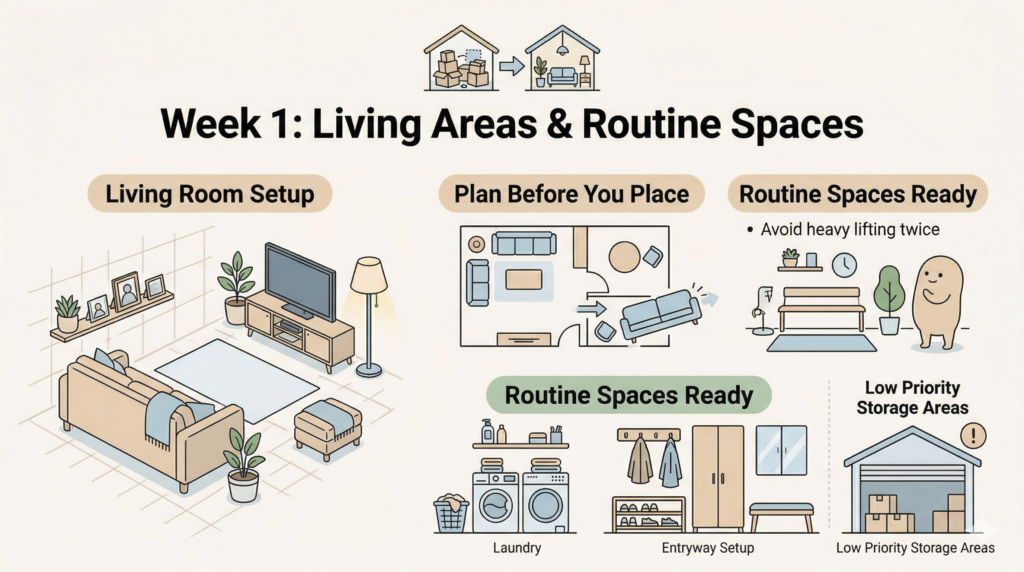
Living Room Setup Without the Pressure
The living room can wait until after your essential rooms are settled, but it is worth tackling in Week 1 because it is where your household comes together to relax and decompress. Start with:
- Positioning and assembling main furniture pieces using a floor plan
- Setting up your TV and entertainment system
- Placing lamps for comfortable lighting
- Setting out a few personal touches: photos, plants, or a familiar throw blanket
For heavier furniture arrangement, packing and organizing tips from our crew includes practical guidance on placing large items safely without damaging your new floors.
MoveAdvisor recommends having a floor plan ready before you start placing furniture, not after. Moving a 200-pound couch twice is not how you want to spend your first week.
How to Handle Shared and Storage Spaces
Laundry rooms, hallways, mudrooms, and entryways are functional spaces that should be ready by the end of Week 1. Set up coat hooks, shoe storage, and your laundry setup so household routines can run smoothly.
Storage areas — basements, attics, garages — can stay partially unpacked through Week 1 without impacting daily life. These are lower-priority zones that you can work through gradually.
What Can Wait Until Week 2 and Beyond?
One of the smartest parts of any unpacking strategy is knowing what not to touch right away. Opening boxes in low-priority spaces early creates clutter without adding function. Here is what to leave sealed for now.
Boxes You Should Leave Sealed for Now
The following categories can wait until Week 2 or later without any impact on your quality of life:
- Books and bookshelves
- Artwork and wall decor
- Guest bedroom furniture and linens
- Seasonal items and holiday decorations
- Collections, hobby items, and memorabilia
- Extra kitchen gadgets and rarely-used appliances
- Garage tools and equipment
| “Books are the number one thing people feel guilty about leaving in boxes. Do not. They are heavy, they take time to organize, and a bookshelf can wait two weeks. Focus your energy on the rooms where you live every day first.”— Janet Kowalski, Professional Home Organizer and Moving Consultant, Greater Wisconsin Region, 20+ years experience |
Decor, Books, and Non-Essentials
Decorating your new home is exciting, but it belongs in Week 2 or even later. Once your essential spaces are settled and your daily routines are running, you will have a much clearer sense of how you want each room to feel. Decorating with that clarity produces better results than rushing it in Week 1.
Think of the final stage of unpacking as personalizing, not just settling. Hang your artwork, arrange your books, and add the finishing touches on your own timeline. There is no deadline for feeling truly at home.
How Long Should Unpacking Really Take?
Unpacking timelines vary widely depending on your home size, how organized your boxes are, and how much time you can dedicate each day. Here are realistic estimates:
| Home Size | Functional Setup | Full Unpack |
| Studio / 1-Bedroom | 1 day | 2 to 5 days |
| 2-Bedroom Apartment | 1 to 2 days | 4 to 7 days |
| 3-Bedroom House | 2 to 3 days | 1 to 3 weeks |
| 4+ Bedroom Home | 3 to 5 days | 2 to 4 weeks |
Research from Burly Boyz Moving confirms that most moves take between 3 and 21 days to unpack fully, with organized movers landing on the shorter end of that range.
The most important thing to remember is that a fully functional home and a fully unpacked home are two different goals. You can achieve the first within 3 days. The second can take weeks, and that is completely normal.
Your Full Unpacking Priority Order at a Glance
| Priority | Room / Area | Target Timeline |
| 1st | Essentials Box | Day 1 (first hour) |
| 2nd | Bedroom | Day 1 (before bed) |
| 3rd | Bathroom | Day 1 (before bed) |
| 4th | Kitchen | Day 2 |
| 5th | Kids’ Rooms / Pet Areas | Day 2 |
| 6th | Home Office (if remote worker) | Day 2 to 3 |
| 7th | Living Room | Days 3 to 5 |
| 8th | Laundry / Mudroom / Entry | End of Week 1 |
| 9th | Guest Bedroom / Storage | Week 2+ |
| 10th | Decor, Books, Collections | Week 2+ |
Ready to Move Stress-Free in Green Bay? We Are Here to Help.
Unpacking is so much easier when your move-in day runs smoothly. At Green Bay Moving Co., we help families across Green Bay, Appleton, De Pere, Ashwaubenon, and surrounding Wisconsin communities move efficiently and without the stress.
Whether you need full packing help, furniture placement, or just a reliable crew to handle moving day, our team is ready to make your transition as smooth as possible. Start with our complete moving checklists to plan your move from packing to that final box in the living room.
Call us today or request a free quote online. Your stress-free move in Green Bay starts with one conversation.
Frequently Asked Questions About Unpacking After a Move
Should I clean the new home before unpacking?
Yes, and it is worth doing before any boxes come off the truck. A quick wipe-down of bathroom surfaces, kitchen cabinets, and floors makes the unpacking process feel cleaner and more manageable. If you hired professional cleaners before move-in, you are already ahead.
What if my labeled boxes end up in the wrong rooms?
This is common, especially during busy moving days. The fix is simple: ask your professional movers in Green Bay WI to check room labels as each box comes off the truck. Good labeling combined with a room drop-off system saves you from moving heavy boxes a second time inside the house. Our box labeling tips that make unpacking faster walk you through exactly how to label for room-specific placement.
Is it okay to unpack in multiple rooms at once?
It feels efficient, but it usually is not. Opening boxes across multiple rooms simultaneously creates scattered clutter and no sense of completion anywhere. Finishing one room before moving to the next gives you momentum, reduces visual overwhelm, and means you always have at least one organized space to retreat to.
How do I handle boxes I am not sure where to put?
Create a single holding zone — a spare room, a hallway corner, or the garage — for boxes without a clear home. Do not open them during your first week. Once your priority spaces are settled, revisit these boxes with a clearer sense of your new layout and storage options.