





A moving estimate is a written document from a moving company that itemizes every charge for your relocation, including transportation, labor, packing, insurance, and accessorial fees. To read it correctly, check the estimate type (binding, non-binding, or not-to-exceed), verify every line item matches agreed services, and ask about any charges not listed before you sign.
That single document can be the difference between a smooth transition and a stressful, over-budget moving day. According to a 2025 survey by This Old House, the average cost of a move is $3,020, with local moves averaging $1,489 and long-distance moves averaging $3,124. With that kind of money on the line, understanding your moving estimate is one of the smartest things you can do before your Green Bay move. This guide walks you through every section of a moving estimate step by step so you can plan ahead with confidence.
Key Takeaways
- A moving estimate must be in writing and signed by both you and your mover, with every charge clearly itemized, per FMCSA federal regulations
- Understanding the three estimate types (binding, non-binding, and binding not-to-exceed) can save you hundreds or thousands of dollars on your move
- Hidden fees like stair charges, long carry fees, and shuttle service can add $50 to $500+ to your final bill if you do not ask about them before moving day
- Nearly 40% of movers report their move cost more than expected, making a careful estimate review essential
What Is a Moving Estimate and Why Does It Matter?
A moving estimate is a formal, written document that a moving company provides to outline the projected cost of your move. It serves as both a budget-planning tool and the foundation for your moving contract. For interstate moves, federal law requires movers to provide a written estimate that includes all transportation, accessorial, and advance charges before your belongings are loaded.
Whether you are moving across Green Bay, relocating from Appleton, or heading to a new home in De Pere, every licensed and insured moving company should provide you with a detailed moving estimate before work begins. This document is your first line of protection against unexpected charges.
What Information Should a Moving Estimate Include?
A properly prepared moving estimate should contain specific details about your move. Here is what to look for:
- Your contact information and addresses for both origin and destination
- Move dates including pack date, load date, and delivery window
- Inventory list of all items to be transported
- Estimated weight of your shipment
- Itemized service charges for transportation, labor, packing, and any specialty services
- Valuation coverage options explaining your insurance choices
- Payment terms and accepted payment methods
- The estimate type (binding, non-binding, or binding not-to-exceed)
Annette M. Sandberg, FMCSA Administrator-Designate, has emphasized that federal rules are designed to promote fair dealing by movers and ensure consumers have the information they need to make educated decisions about moving across state lines (FMCSA). If any of these details are missing from your estimate, ask your mover to include them before you sign.
How Is a Moving Estimate Different from a Final Invoice?
Your moving estimate is a projection of costs. Your final invoice is the actual bill you receive after the move is complete. The two numbers should be close, but they are not always identical.
Under federal law, your mover must deliver your shipment upon payment of 100% of a binding estimate or 110% of a non-binding estimate at the time of delivery. Any remaining balance on a non-binding estimate is billed afterward. This is why reviewing your estimate before moving day matters so much. Use our complete moving checklists to track your budget alongside your estimate so nothing catches you off guard.
What Are the Three Types of Moving Estimates?
Moving companies offer three main types of moving estimates, and each one handles pricing differently. The type you choose directly affects how much you pay on moving day. Understanding these options helps you select the best protection for your budget.
Binding Estimates
A binding estimate locks in a fixed price for your move based on the inventory and services listed. If nothing changes between the estimate and moving day, you pay exactly the quoted amount. Even if your belongings end up weighing more than projected, the price stays the same. The trade-off is that you will not pay less if your shipment is lighter than expected.
Non-Binding Estimates
A non-binding estimate is the moving company’s best guess at what your move will cost. The final price is calculated after your shipment is weighed. According to the FMCSA, a non-binding estimate is not binding on the mover, and final charges will be based on the actual weight and services provided. You could pay more or less than the quoted amount.
Binding Not-to-Exceed Estimates
A binding not-to-exceed estimate sets a maximum cap on your moving cost, but the price can go lower if your shipment weighs less than expected. This option gives you the strongest budget protection available. Mike Marshall, Senior Contributor at FreightWaves with nearly a decade of experience in the trucking and moving industries, recommends choosing a binding or not-to-exceed estimate for better cost predictability, especially for long-distance moves (FreightWaves Checkpoint).

Moving Estimate Comparison Table
| Feature | Binding | Non-Binding | Binding Not-to-Exceed |
| Price guaranteed? | Yes | No | Yes (maximum cap) |
| Can price go down? | No | Yes | Yes |
| Can price go up? | Only with change order | Yes, based on actual weight | No |
| Best for | Locked-in budgets | Flexible or small moves | Maximum budget protection |
| FMCSA delivery payment | 100% of estimate | Up to 110% of estimate | 100% of estimate |
If you are moving within Green Bay or anywhere in Wisconsin, ask your professional movers which estimate types they offer and choose the option that fits your comfort level.
How Do You Read Each Section of a Moving Estimate?
Reading a moving estimate section by section ensures you understand every charge before signing. Each part of the document covers a different aspect of your move, from scheduling to insurance.
Dates, Weight, and Inventory Details
The top of your moving estimate should list your pack date, load date, and delivery window. For long-distance moves, delivery spreads can range from 2 to 23 days depending on mileage and shipment size.
Pay close attention to the estimated weight of your shipment. Many residential movers in Green Bay calculate pricing based on weight for long-distance moves, while local moves are often billed hourly. For interstate moves, movers within 50 miles of your home must base the estimate on a physical survey of your household goods, per FMCSA regulations. Virtual surveys are also permitted if you waive the in-person requirement in writing.
Service Charges and Accessorial Fees
This section breaks down the cost of each service included in your move. Common line items include:
- Transportation charges for moving your belongings from origin to destination
- Labor charges for loading, unloading, and carrying items
- Packing services including materials like boxes, tape, and bubble wrap
- Third-party services for specialty items such as pianos, pool tables, or safes
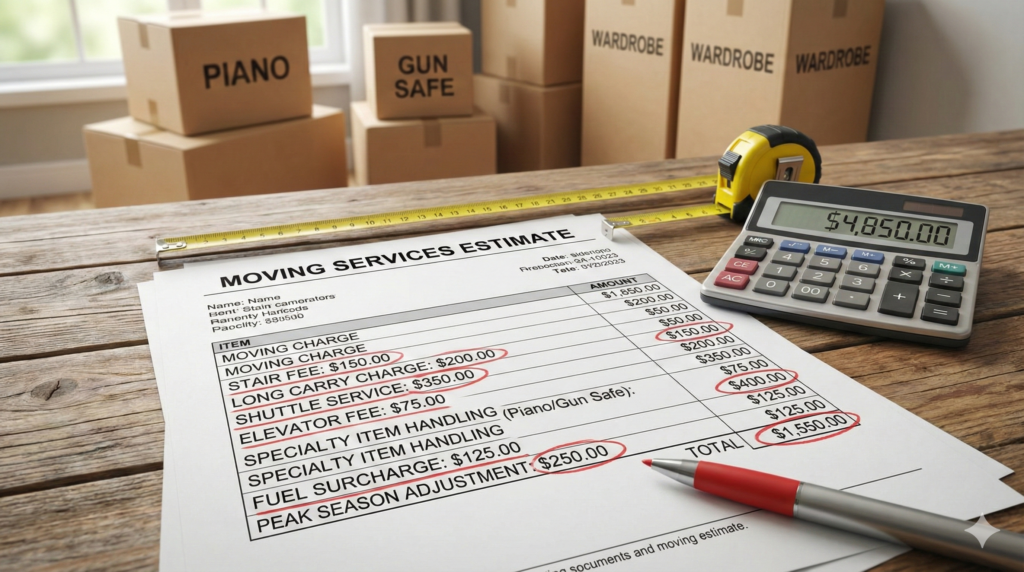
- Accessorial fees for stairs, elevators, long carries, or shuttle trucks
Review each line carefully and confirm it matches the services you discussed. If you are unsure whether a service is necessary, check out our guide to things you didn’t know movers can handle for helpful context on what professional movers typically cover.
Valuation and Insurance Coverage
Every moving estimate should outline your valuation coverage options. There are two standard choices:
- Released value protection is basic coverage included at no extra charge. It covers your belongings at just $0.60 per pound per item. To put that in perspective, a 30-pound TV would only be reimbursed at $18 if it were damaged during the move.
- Full value protection requires the mover to repair, replace, or reimburse the current market value of any lost or damaged item. This coverage costs more but provides significantly stronger protection.
If you are weighing your packing options and how they affect costs, our guide on the pros and cons of DIY vs. full packing service can help you decide what makes sense for your situation.
What Hidden Fees Should You Watch For on a Moving Estimate?
Hidden fees are charges that do not always appear on your initial moving estimate but show up on your final bill. These extra costs are one of the biggest reasons nearly 40% of movers report spending more than expected. Knowing what to look for helps you ask the right questions before signing.
Stair Fees, Long Carry Charges, and Shuttle Services
If your home has stairs, a long driveway, or limited truck access, extra charges may apply. Here are the most common:
- Stair fees are charged per flight when movers carry items up or down stairs at either location
- Long carry fees kick in when movers must carry items more than 75 feet from the truck to your door, typically at $0.50 to $1.00 per foot. A 200-foot carry could add $125 to $200 to your bill.
- Elevator reservation fees from building management typically run $100 to $250, and some moving companies add their own elevator surcharge on top
- Shuttle service fees apply when a full-size moving truck cannot access your property and a smaller vehicle is needed to transfer your belongings
During your estimate walkthrough, mention all stairs, narrow driveways, and building access rules so your mover can account for them upfront.
Packing Materials, Specialty Items, and Peak-Season Surcharges
Beyond access-related fees, several other charges can inflate your final bill:
- Specialty item handling carries additional fees. Pianos typically cost $150 to $300 extra, pool tables run $300 to $500 due to disassembly, and gun safes or heavy equipment add $100 to $200 per item.
- Packing materials like wardrobe boxes, dish packs, and mattress bags may be billed separately from labor
- Peak-season surcharges during summer months and holidays can increase your cost by 20% to 30% compared to off-season dates
- Fuel surcharges are tied to current diesel prices, which averaged $4.15 per gallon in early 2025, and are passed along to customers on long-distance moves
Overall, hidden moving fees typically range from $50 to $300, while specialty handling can push that number even higher. The best way to avoid surprises is to disclose every detail about your home and belongings during the estimate process.
How Can You Protect Your Budget Before Signing a Moving Estimate?
Taking a few proactive steps before signing your moving estimate can save you hundreds of dollars and prevent stressful surprises on moving day. Here is a step-by-step approach that works for homeowners and renters across Green Bay, Appleton, and the surrounding Wisconsin communities.
Get at Least Three Written Estimates
Follow these steps to make sure you are comparing estimates accurately:
- Request written estimates from at least three licensed and insured moving companies in the Green Bay area
- Verify each company’s USDOT number on the FMCSA Protect Your Move website to confirm they are registered and authorized
- Compare estimates side by side using a checklist that includes services, fees, estimate type, and valuation options
- Watch for red flags like extremely low estimates, cash-only payment policies, large non-refundable deposits, or missing company information
- Request in-person or virtual surveys rather than accepting phone-only estimates, which tend to be less accurate
An affordable moving company in Green Bay should always be willing to provide a transparent, written estimate with no pressure to sign immediately.
Ask the Right Questions Before Moving Day
Before you commit, ask your mover these essential questions:
- What type of moving estimate is this (binding, non-binding, or not-to-exceed)?
- Are there any charges not listed on this estimate that could apply on moving day?
- What happens if my shipment weighs more or less than the estimate?
- Do you charge extra for stairs, long carries, elevators, or shuttle service?
- What valuation coverage options are included, and what are the costs for upgrades?
- What forms of payment do you accept at delivery?
- Can I get a revised estimate if my inventory changes before the move?
For a complete guide to organizing your moving day, check out our prep for moving day checklist so you are ready from start to finish.
Ready for a Stress-Free Move in Green Bay?
Understanding your moving estimate puts you in control of your budget and your peace of mind. When you know the difference between estimate types, recognize hidden fees before they appear, and ask the right questions upfront, you are set up for a smooth transition to your new home.
At Green Bay Moving Co., our crew walks you through every line of your estimate so you know exactly what to expect. No hidden fees, no confusing fine print. Just reliable, friendly movers who are here to help you every step of the way.
Whether you are moving across town or relocating from Appleton, De Pere, or Allouez, we would love to make your next move stress-free. Call professional movers in Green Bay today for a transparent estimate you can trust.