Skip to content






No matter what Wisconsin throws at you, a weather proof move comes down to three things: monitor the forecast at least seven days out, protect your belongings with the right materials for each condition, and keep your crew safe with proper gear and hydration. Whether you are moving in a January snowstorm, a spring downpour, or a humid July heat wave, Green Bay families can move smoothly with the right plan.
Key Takeaways
- Start tracking the local forecast 7 days before your move date.
- Use plastic bins and waterproof tarps for rain and snow moves; use moving blankets (not plastic wrap) to protect wood and leather in summer heat.
- Lay floor protection inside both the old home and the new home before movers arrive.
- Electronics, candles, vinyl records, and medications should never ride in a hot moving truck.
- Schedule summer moves before noon and clear all walkways before winter movers arrive.
- Green Bay averages 48 inches of snow per year — weather planning is not optional here.
How Does Rain Affect Your Moving Day?
Moving in the rain does not have to derail your plans. Light rain is manageable with the right prep. Heavy rain is the scenario that requires a decision: adapt or reschedule. The biggest risks with rain are damaged boxes, slippery floors inside your home, and soaked furniture. Here is how to handle each.
Protecting Boxes and Furniture from Rain
Standard cardboard boxes break down fast when wet, and the damage to whatever is inside can be immediate. Plastic bins are the best alternative for rainy-day moves — they seal completely and give your belongings a waterproof barrier that cardboard simply cannot. For furniture like sofas and chairs, use waterproof moving pads covered with plastic wrap to keep moisture out while the pad protects the surface underneath.
According to Allied Van Lines, the moving truck itself needs attention too. Confirm there are no leaks inside the truck and that rain cannot enter from the back when it is being loaded. Position the truck as close to the door as possible to minimize the distance items travel in the open air.
“Moving during a light rain does not usually cause any problems. However, moving during heavy rain can cause some challenges. If it is raining heavily, it might be best to postpone the move until the following day, if you have the luxury of doing that.”
— Allied Van Lines, Moving Resources & Family Guide to Moving
Floor and Entryway Protection Inside the Home
Every trip in and out during a rainy move tracks water and mud onto your floors. Lay down towels, blankets, or moving pads at every entry point before the first box comes through the door. This protects hardwood floors and carpet from water damage and keeps your movers safe on slippery surfaces. A smart strategy is to have some crew members working inside and others outside, passing boxes across the threshold so wet shoes stay outside.
Have extra dry towels available throughout the move. For our complete moving checklists, including a full supplies list for rainy-day moves, check the Green Bay Moving Co. resource hub.
When Is Rain Serious Enough to Postpone?
Light to moderate rain is workable with prep. Thunderstorms with lightning, flash flooding conditions, or sustained heavy rain that soaks items faster than you can protect them are different. If postponing is an option, take it. If not, communicate early with your moving crew about the conditions so everyone adjusts the pace and sets safety as the priority.
Moving in Green Bay Winter: Snow and Ice on Move Day
Green Bay is not a gentle winter city. According to bestplaces.net, Green Bay averages 48 inches of snow per year — nearly double the national average of 28 inches. The National Weather Service reports that seasonal snowfall totals across northeast Wisconsin range from 40 to 50 inches in a typical year. For anyone moving between November and April, snow is not a possibility — it is a probability. Here is how to move confidently through it.
Clearing Walkways and Driveways Before Movers Arrive
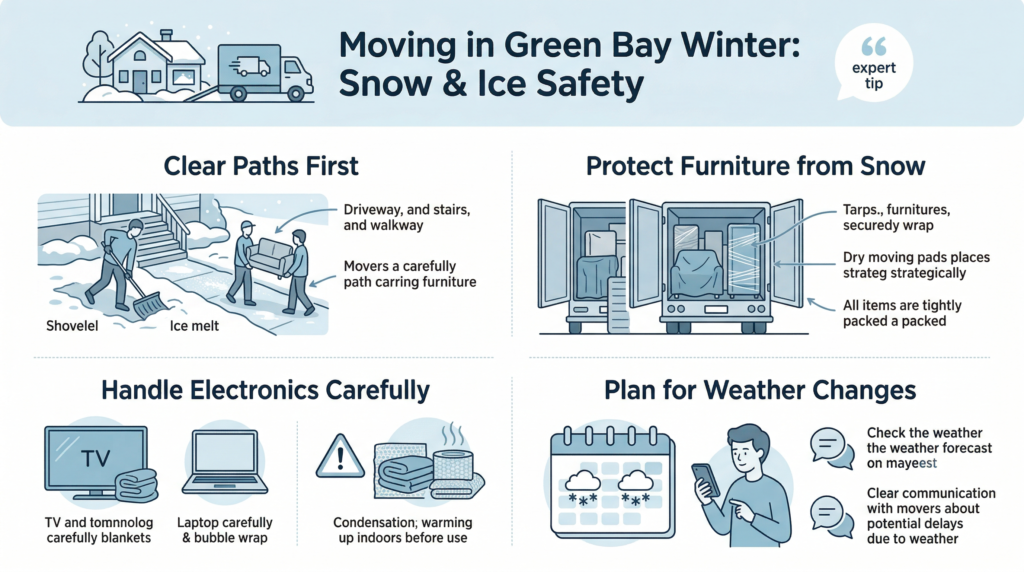
Clear every path before the moving truck pulls up. This means the driveway, all sidewalks, steps, and the entryway at your new home. Scatter ice melt or sand on any icy patches, especially stairs. Re-check paths throughout the move if snow keeps falling. Movers carrying heavy furniture through icy paths is a safety risk for everyone.
According to Extra Space Storage, checking live weather forecasts about a week ahead keeps you proactive against unpredictable Wisconsin snow, rain, or sleet. As moving day approaches check the forecast daily and inform your moving coordinator of any major changes as soon as you know.
Protecting Your Belongings from Cold and Moisture
Furniture like chairs and sofas can be covered with a simple tarp for light snow and rain protection. For heavier snowfall, cover moving pads with plastic wrap to keep the pads themselves dry — wet pads offer no protection and get heavy fast. Inside the truck, ensure items are loaded tightly to prevent shifting caused by slippery surfaces.
For tips on protecting specific furniture types during any move, the packing tips from our crew guide covers room-by-room strategies that also apply to winter moves.
“When packing for a winter move, you may not realize that your personal belongings will need an extra layer of protection from cold weather. Long exposure to extreme cold increases susceptibility to breaking or malfunctioning — especially when moving long distances.”
— Extra Space Storage, Winter Moving Tips Guide
Electronics and Sensitive Items in Cold Weather
Sudden temperature changes are the enemy of electronics. Moving a TV or laptop from a warm house into freezing outdoor air and then into a cold truck creates condensation inside the device. This moisture can cause short circuits and permanent damage. Wrap electronics in moving blankets or bubble wrap for insulation and — once you arrive at your new home — let them warm up gradually before plugging anything in.
Musical instruments, glass items, and anything with adhesive components (picture frames, assembled furniture) are also sensitive to the cold and should be packed in insulated containers where possible. If postponing your move because of an incoming blizzard is on the table, contact your moving coordinator and your landlord as early as possible.
“A day or two before your move date, check in with your movers and confirm dates, times, contingencies, and costs. Be sure to review how the movers plan to deal with snow or rain.”
— American Family Insurance, Winter Moving Tips (Updated October 2024)
How Do You Move Safely in Summer Heat?
Summer is the busiest season for moves. It is also the most physically demanding. According to the Centers for Disease Control and Prevention, heat-related illness can occur quickly without proper hydration and rest. OSHA emphasizes rest cycles and hydration as key safety measures for labor-intensive work in high temperatures. Moving furniture and boxes in 85-degree Wisconsin humidity is exactly that kind of work.
What Time of Day Should You Schedule a Hot-Weather Move?
The single most effective heat strategy: start early. Schedule your summer move for early morning when temperatures are at their lowest. Avoid the peak afternoon heat window — typically between noon and 4 PM — when sun exposure and temperatures are highest. If you have flexibility, plan to have all loading done before noon and use the afternoon for unpacking inside your air-conditioned new home.
For more on timing strategy across all seasons, the best time of year to move in Wisconsin guide breaks down month-by-month conditions across Green Bay and surrounding communities.
Staying Hydrated and Avoiding Heat Illness
The American Red Cross recommends that the average person drink approximately 3/4 of a gallon of water per day — more during strenuous physical activity in the heat. For a full moving day, that number should be higher. Set up a hydration station at both the old home and the new home with water, electrolyte drinks, and hydrating snacks like fruit. Take mandatory breaks every 45 to 60 minutes in a shaded or air-conditioned area.
“Hydration is critical when moving under extreme heat. Both customers and moving crews should have easy access to water and electrolyte drinks. Regular breaks in shaded areas help prevent fatigue and overheating. OSHA emphasizes rest cycles and hydration as key heat-safety measures for labor-intensive work.”
— Confidential Movers, Moving in Hot Climates: Practical Tips for Safe and Efficient Relocation (December 2025)
Items That Cannot Go in a Hot Moving Truck
The interior of a moving truck parked in summer sun can reach extreme temperatures within minutes. Certain belongings cannot survive that environment:
- Electronics (laptops, TVs, gaming consoles) — heat causes condensation and permanent component damage
- Candles — will melt and damage surrounding items
- Vinyl records — warp at elevated temperatures
- Medications, vitamins, and supplements — many require temperature-controlled storage
- Cosmetics and skincare products — especially those with active ingredients
- Perishable food items — move in a cooler with ice
- Wood and leather furniture — wrap wood pieces in moving blankets (not plastic, which traps humidity) and cover leather with breathable cloth
Understanding why moving blankets matter for summer moves specifically — they insulate against heat while allowing surfaces to breathe, unlike plastic wrap which traps humidity against wood and leather.
What Should You Wear for Each Weather Condition on Move Day?
Your outfit on moving day is a practical decision that affects your safety and comfort for 6 to 10 hours of physical work. Here is a quick guide by weather condition:
| Condition | What to Wear | Key Accessory |
| Rain | Waterproof jacket, moisture-wicking layers, water-resistant pants | Non-slip waterproof boots with strong ankle support |
| Snow / Ice | Warm layers (base + mid + outer shell), gloves with grip, thermal socks | Waterproof, insulated, non-slip boots — this is the non-negotiable |
| Summer Heat | Light-colored, breathable fabric (cotton or moisture-wicking), long coverage for sun protection | Wide-brimmed hat, sunglasses, SPF 30+ sunscreen, closed-toe shoes |
How Should You Communicate With Your Movers About Bad Weather?
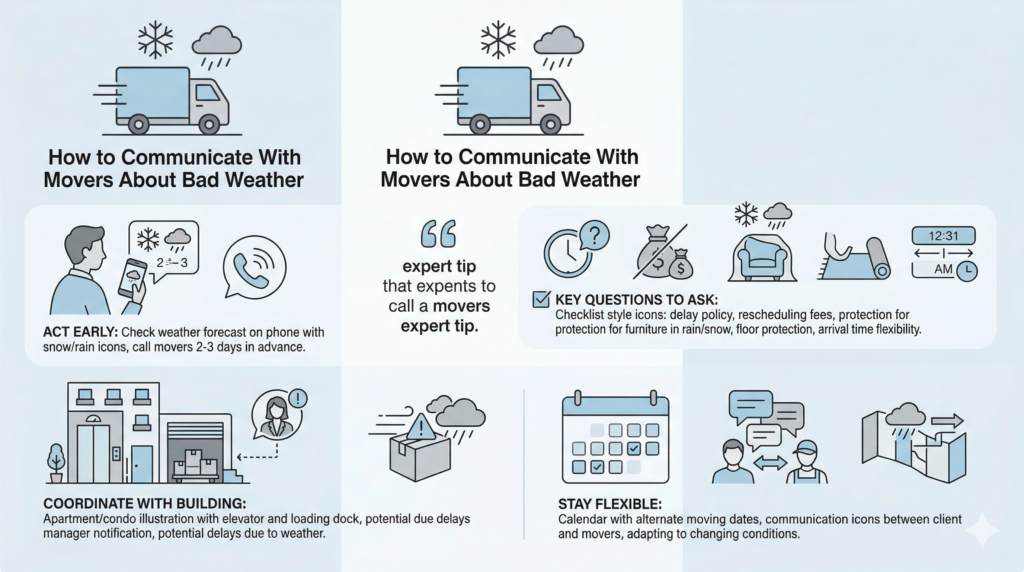
Your moving company is your partner on move day, and they need information as early as possible. Do not wait until moving morning to flag a weather concern. A good rule: if you see a concerning forecast two to three days out, call your movers the same day you see it.
Here is what to discuss with your moving team before any weather event:
- What is their policy for weather delays or postponements?
- Is there a rescheduling fee if you need to move due to an extreme weather event?
- How do they protect furniture and boxes in rain or snow?
- Will they bring their own floor protection, or do you need to supply it?
- What time will they arrive, and should that window shift based on conditions?
If you are moving into an apartment or condo, notify building management early too. In Green Bay’s winter months, elevators and loading docks can become bottlenecks when multiple residents deal with weather delays on the same day. Our local guides for Wisconsin families moving cover building-specific moving logistics for Green Bay, De Pere, Appleton, and surrounding communities.
“If a snowstorm or freezing rain is predicted on your moving day, be proactive and contact your moving company to discuss alternative dates or solutions. Professional movers understand the importance of flexibility during winter moves and are prepared to work with you to accommodate weather-related delays.”
— A-One Moving & Storage, Top Tips for Packing and Moving During the Winter (February 2025)
Ready to Move No Matter the Weather? Green Bay Moving Co. Has You Covered
Wisconsin weather does not wait for a convenient moving day. Our crew at Green Bay Moving Co. moves families across Green Bay, Appleton, De Pere, Allouez, Howard, Suamico, and surrounding communities through every season — rain, snow, and summer heat included. We bring the floor protection, the packing know-how, and the experience to adapt when the forecast changes.
Before your move, use our complete moving checklists and our moving day prep checklist to build your weather-ready plan. And when you are ready to book, our team is here to help you move with confidence — no matter what the sky looks like.
Call Green Bay Moving Co. today for a free quote and a stress-free move, whatever the weather.