Skip to content






Managing kids and pets on move day requires a simple rule: keep them out of the action zone. Before the first box leaves your home, designate one adult to supervise children and a separate safe room for pets with the door clearly marked. Pack a comfort bag for your kids and a familiar scents kit for your animals the night before. That single prep step removes the two biggest distractions from your Green Bay moving crew, and keeps everyone safe from start to finish.
Key Takeaways
- Assign one dedicated adult to watch kids or pets for the entire move day — no shared responsibility.
- Set up a safe room for pets before movers arrive, with a door sign so crew members do not enter.
- Pack a moving-day activity bag for kids and a comfort kit for pets the night before.
- Brief your moving crew on where pets are located and your door protocol.
- Move pets last to minimize the total time they spend in a disrupted environment.
Why Move Day Is So Risky for Kids and Pets
Move day looks like controlled chaos from the outside. But for children under ten and household pets, it is a genuinely hazardous environment full of open doors, moving strangers, heavy furniture in transit, and loose packing materials underfoot. Understanding the specific risks is the first step to eliminating them.
The Open-Door Problem
The front door stays propped open for hours during a move. Movers carry loads back and forth, no one is specifically watching the threshold, and everyone assumes someone else is. According to Pet Safety Crusader, move day ranks among the most dangerous days of the year for household pets precisely because of this open-door cycle — dogs and cats can bolt through an unattended entrance without anyone noticing for several minutes.
The risk is not limited to pets. Kids and Car Safety research shows that roughly 50 children are unintentionally backed over in driveways each week in the US, and the drivers are typically close relatives or parents. Moving trucks and unfamiliar vehicles in the driveway multiply that hazard significantly.
Common Hazards You Might Not Think About
Beyond open doors, move day introduces a cluster of hazards that do not exist during normal household routines:
- Loose packing materials: Bubble wrap, packing peanuts, and tape can be choking hazards for toddlers and small pets.
- Unsecured furniture: Dressers and bookshelves with safety brackets removed can tip before movers load them.
- Sharp box edges and heavy loads: A moving crew carries hundreds of pounds of furniture and boxes at speed. A child or pet in the path is invisible from behind a large item.
- Cleaning chemicals: Packing often surfaces forgotten cleaning supplies that can be toxic if a pet or toddler finds them.
“The combination of commotion and lack of supervision on move day means children face safety hazards that simply do not exist on a normal afternoon at home. Hiring a professional moving crew gives parents the attention bandwidth to actually watch their kids instead of managing the logistics.”
— J&K Moving Blog, Residential Moving Specialist — jkmoving.com
A 2025 analysis of moving delays found that 45% of move-day delays were caused by preventable distractions. Keeping children and pets safely away from the action is one of the highest-ROI preparations a family can make.
How Do You Keep Kids Safe and Occupied on Moving Day?
Children need structure, not just supervision. A vague instruction to stay out of the way rarely works on a day this exciting and disruptive. The strategies below give kids a defined role or space so they feel included without being in danger.
Set Up a Designated Kid Zone
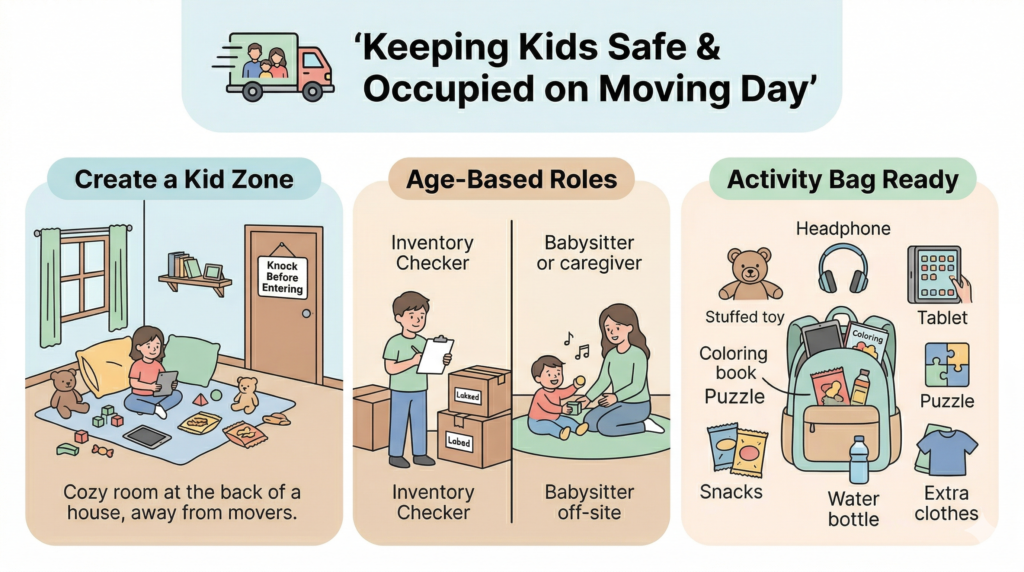
Before the moving crew arrives, pick one room at the back of the house — ideally away from the main loading corridor — and turn it into the kid zone for the day. Unpack a few favorite toys, set up a tablet with downloaded shows, stock it with snacks, and put down a familiar blanket or pillow. Make it feel like a campout, not a time-out.
If your child is younger than five, post a sign on the door so crew members know to knock before entering. This also alerts anyone new to the house that the room is occupied by a child, adding an extra layer of awareness.
Involve Older Kids, Arrange Coverage for Little Ones
Children eight and older can be genuine helpers. Moving experts consistently recommend letting kids make small decisions — what goes in their box, which color sheets go in their bag — because involvement builds excitement instead of anxiety. Assign an older child the job of Inventory Checker: they hold the list of labeled boxes and put a tick next to each one as the movers load it.
For toddlers and children under five, the safest option on move day is a trusted friend, family member, or babysitter who takes them off-site entirely. The activity and noise level is simply too high for close supervision while also managing a move.
Pack a Moving Day Activity Bag the Night Before
Scrambling to find entertainment on move morning adds stress you do not need. The night before, pack a dedicated bag for each child that includes:
- Their favorite stuffed animal or comfort item
- Headphones and a pre-loaded tablet or old phone
- A coloring book or small puzzle
- Snacks they actually like — not move-day leftovers
- A change of clothes and a water bottle
Keep this bag separate from everything being loaded. Mark it with their name and place it in the car before the movers start. This one step prevents the most common kid-related move-day complaint: boredom turning into crying turning into everyone losing focus.
How Do You Keep Pets Calm and Contained During a Move?
Pets experience move day very differently from their owners. They cannot understand why the furniture is disappearing, why strangers are walking through the house, or why their owner seems distracted. Stress in pets shows up as hiding, aggression, vomiting, or escape attempts — all of which cause bigger problems in the middle of a move.
The Safe Room Strategy
The most effective approach is a dedicated safe room for your pet. Choose a room that has already been packed and cleared, place your pet inside with their bed, water bowl, food, and a couple of familiar toys, and put a sign on the door that reads: PET INSIDE — DO NOT OPEN. Tell every member of your moving crew where the pet is before work begins.
Bobcat Movers advises checking on your pet every 30 minutes, but not opening the door unless necessary — some animals shut down silently under stress and appear fine when they are not. A quick listen at the door is enough for most check-ins.
“On moving day, give your pets a designated empty room and keep the door closed. This keeps them safe and prevents them from running out if they become anxious. Move your pets last so they deal with minimal disruption.”
— Martin Co. Property Management, Moving with Pets Guide — martinco.com
What to Put in Your Pet’s Comfort Kit
Pack a separate bag for your pet the night before — just like the kids get an activity bag. Include:
- Food and water bowls plus enough food for 24 hours
- A worn t-shirt or item that smells like you — familiar scent is the fastest way to reduce pet anxiety
- Their favorite toy or chew to keep them occupied
- Current vet records and ID tags updated with your new address and your cell number (not your old landline)
- Any medications clearly labeled
Do not feed your pet a large meal right before loading them into a vehicle. Travel can upset their stomach, particularly for cats. Stick to a small portion and give them a proper meal once you are settled at the new address.
Should You Board Your Pet on Move Day?
For pets with high anxiety, territorial cats, or dogs that have never been crate-trained, the simplest solution is a boarding facility or a trusted friend’s home for the day. This removes the risk entirely. If you go this route, drop them off before the movers arrive and pick them up once the new home has been cleared of hazards and their space is set up.
If boarding is not possible, New Jersey Real Estate Network recommends updating your pet’s microchip information before move day, not after. A frightened animal that escapes during the chaos of a move is significantly harder to recover if the chip still lists your old address.
Briefing Your Moving Crew About Kids and Pets
Your Green Bay moving crew is focused on loading and transporting your belongings efficiently. They are not monitoring for a cat near the door or a toddler who wandered into the hallway. A two-minute briefing before work starts can prevent the kind of accident that ruins an otherwise smooth move.
Simple Instructions That Prevent Accidents
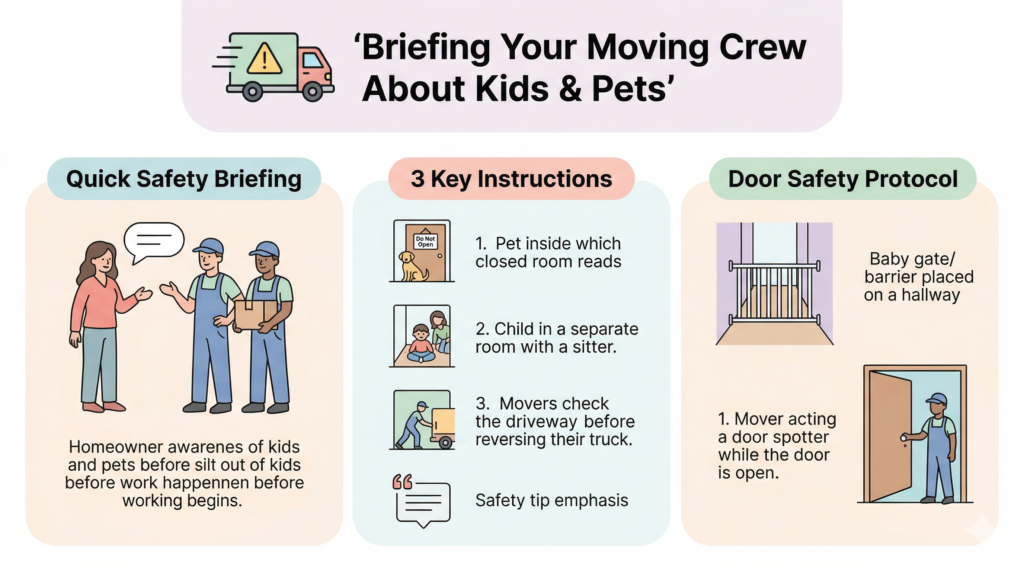
When the crew arrives, give them three pieces of clear information:
- Where your pet is: “The cat is in the back bedroom. The door has a sign. Please do not open it.”
- Where your kids will be: “My daughter is in the front room with a sitter. The movers do not need to go in there.”
- Driveway protocol: “Please check the driveway before reversing. We have a young child.
Most professional movers are very receptive to this briefing. It takes less than two minutes and it means your crew is actively aware instead of accidentally unaware.
Door Protocol for Movers
If possible, use a baby gate or temporary barrier at the end of the hallway where your pet or child is located. This creates a physical boundary that reinforces your verbal instructions. Alternatively, ask one crew member to designate themselves as the door spotter during loading — someone whose job is to watch the threshold when the door is propped open.
“Briefing your moving crew on where pets are and posting a clear sign on the door is the most underused safety step in residential moves. It takes two minutes and it works. The movers appreciate knowing — it is a liability risk for them too.”
— Hansen Bros. Moving & Storage, Move Day Safety Guide — hansenbros.com
Settling In: Helping Kids and Pets Adjust to Your New Green Bay Home
Getting through move day is the goal, but the first night in a new home sets the tone for how quickly your family adjusts. A few deliberate steps on arrival make a significant difference for both children and animals.
Unpack Their Spaces First
Resist the urge to tackle the kitchen or living room first. Moving specialists at JK Moving consistently recommend setting up children’s bedrooms and pet spaces as the first priority when you arrive at a new home. Familiar furniture in a familiar arrangement — even in an unfamiliar room — triggers a sense of safety faster than any other technique.
For pets, set up their safe room at the new home before you let them explore. Place their bed, bowls, and familiar-scented items in one room first, let them settle for a few hours, then gradually introduce them to the rest of the house one room at a time.
Keeping Routines Intact on Day One
Children and pets both regulate stress through routine. Feed your pet at their regular time, even if it means eating your own dinner late. Put your kids to bed at the usual hour, even if the boxes are not all unpacked. Walk the dog at the normal time. These small acts of consistency send a clear signal that life is returning to normal — and that signal matters more on the first night than it does on any other.
According to guidance from Tamara Like Camera’s family moving resource, starting move preparations three to four months in advance and maintaining familiar routines through the transition significantly reduces emotional disruption for both children and pets. The more predictable the day feels, the faster the adjustment.
Quick Reference: Move Day Plan for Kids and Pets
| Timing | Kids | Pets |
| Night Before | Pack activity bag; explain the day | Pack comfort kit; update ID tags |
| Before Crew Arrives | Set up kid zone; assign adult supervisor | Set up safe room; post door sign |
| Move Morning | Brief crew; keep toddlers off-site if possible | Brief crew; check every 30 mins |
| At New Home | Unpack their room first; keep bedtime routine | Safe room first; introduce gradually; keep routines |
Ready for a Stress-Free Move in Green Bay?
Moving with kids and pets is not easy, but it is absolutely manageable when you treat their safety as part of the moving plan itself, not an afterthought. The families who have the smoothest move days are the ones who set up the safe room the night before, assigned one adult to supervision, and briefed the crew before the first box left the house.
If you are planning a local move in Green Bay or anywhere across Green Bay, De Pere, Allouez, Ashwaubenon, or Appleton, the team at Green Bay Moving Co. LLC is here to help you build a move-day plan that works for your whole family — pets included. Our crew is experienced, licensed, insured, and genuinely happy to work around your family’s schedule.
Check out our moving day prep checklist, browse our complete Green Bay moving checklists, or read our packing tips from our crew to get a head start. And if you have elderly family members making the move with you, our senior move planning guide covers everything families need to know.
Ready to book? Contact Green Bay Moving Co. today for a free quote and a crew that treats your home — and your family — with real care.