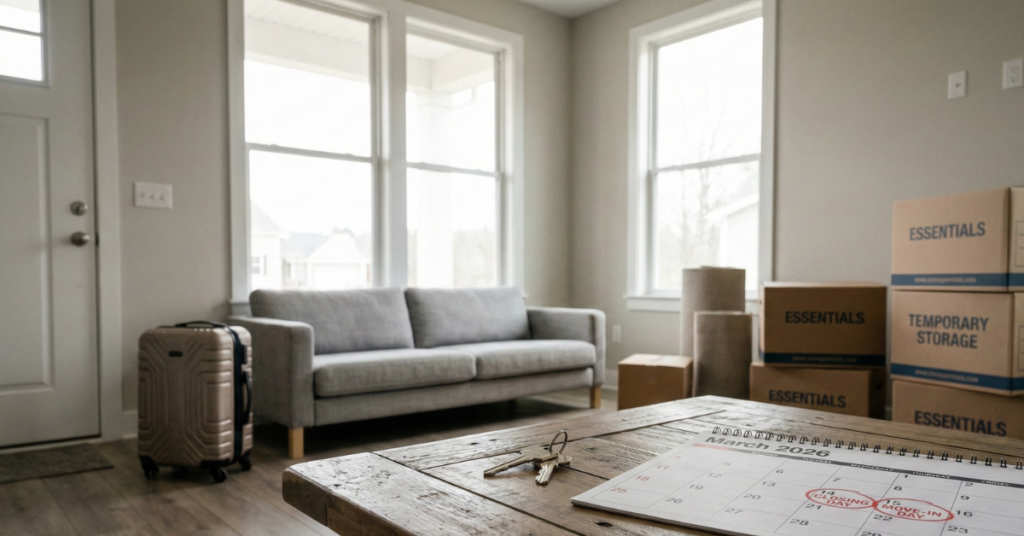






A safe winter move in Green Bay starts with three priorities: salt and shovel every walkway before the crew arrives, lay floor mats and tarps at every entry point, and schedule your move mid-week in January or February to save up to 30% on moving costs.
Winter Moves in Green Bay: Salt, Mats & Timing
With an average of 55.6 inches of annual snowfall, Green Bay winters demand extra preparation, but the off-season savings and flexible scheduling make it well worth the effort.
Key Takeaways
- Green Bay averages 55.6 inches of snow per year, so clearing and salting walkways is essential on moving day
- Placing floor mats and protective coverings at every entry point prevents tracked-in slush and salt damage to your floors
- Moving during winter (December through February) can save you 20-30% compared to peak summer rates
- Start prepping at least one week before your move, and always have a weather backup plan
Why Do People Move During Winter in Green Bay?
Winter may not be the first season that comes to mind for relocating, but for Green Bay residents, a December through February move can be a smart financial decision. According to the American Moving and Storage Association, roughly 50% of all household moves happen during the summer months, while only about 10% take place in winter. That lower demand creates real advantages for anyone willing to bundle up and move during the colder months.
Off-Season Savings You Can Count On
Because demand drops significantly from October through April, most local moving companies offer discounts of 20% to 30% compared to peak July rates, according to iMoving’s cost analysis. For a Green Bay local move that might cost $2,000 in summer, that could mean paying $1,400 to $1,600 instead. The savings extend beyond the moving crew itself. Rental trucks, packing supplies, and even rental housing tend to cost less during winter because fewer people are competing for those resources.
If you want to explore the best timing strategies for your budget, check out our guide on the best time of the year to move.
More Flexible Scheduling and Crew Availability
During the summer rush, booking your preferred moving date can feel like a scramble. In winter, you will have a much easier time selecting the exact day and time that works best for your family. That flexibility also means the moving crew is less rushed, giving them more time and attention for careful loading and unloading. Scheduling a mid-week move on a Tuesday, Wednesday, or Thursday can save you even more, since most people still default to weekend moves regardless of season.
How Should You Prepare Your Walkways and Driveway for a Winter Move?
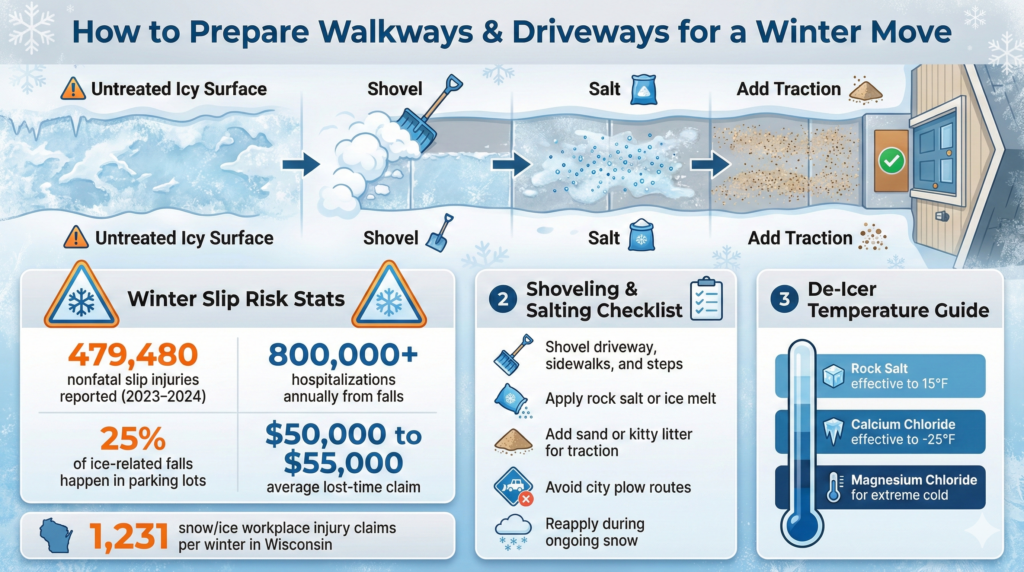
Clearing and treating every walkway your movers will use is one of the most important safety steps for a winter move in Green Bay. According to the U.S. Bureau of Labor Statistics, employers reported 479,480 nonfatal injuries from slips, trips, and falls in 2023-2024 alone. The CDC reports that more than 800,000 people require hospitalization annually due to slip-and-fall injuries, including hip fractures and head wounds.
Lee Wendel, Director of Loss Prevention at SFM Mutual Insurance, emphasizes the need for ongoing vigilance, noting that employers and homeowners alike should keep reminding everyone about the risks of winter slips and falls throughout the entire season, not just at the start. For context, SFM data shows that 25% of all ice-related falls happen in parking lots, and the average lost-time claim from a winter slip-and-fall costs between $50,000 and $55,000.
The danger is not abstract. Former Maine news anchor Kim Block, whose 39-year broadcasting career ended after a traumatic brain injury from a single winter fall in January 2019, serves as a powerful reminder. As she recalls, one moment of lost footing on ice was enough to change everything.
Shoveling and Salting the Right Way
The morning of your move (or the evening before, depending on the forecast), follow these steps to prepare your walkways:
- Shovel all snow from your driveway, sidewalks, front steps, and the path between the door and where the moving truck will park
- Apply rock salt or ice melt evenly across cleared surfaces to prevent ice from forming
- Scatter sand or kitty litter on top of the salt for added traction, especially on slopes or steps
- Check that you are not parking on a scheduled city plow route
- Repeat the salt and sand application if snow or freezing rain continues throughout the day
Do the same at your new home before the movers arrive. If you cannot get there ahead of time, ask your realtor, property manager, or a trusted neighbor to clear and salt the walkways for you.
When Rock Salt Stops Working (Temperature Limits)
Standard rock salt becomes significantly less effective when temperatures drop below about 15°F, according to salt producer Cargill. Green Bay winter temperatures regularly dip into single digits, so you may need alternatives on the coldest days. Calcium chloride works down to about -25°F and is a more reliable option when the mercury plummets. Magnesium chloride is another cold-weather de-icer that works well in extreme conditions.
A research study published in ScienceDirect found that Wisconsin averaged 1,231 snow-or-ice-related workplace injury claims per winter season between 2016 and 2022. Proper de-icing is not just a convenience; it is a safety necessity.
What Are the Best Ways to Protect Your Floors on Moving Day?
Tracked-in snow, slush, mud, and salt can damage your floors before you have even finished unpacking your first box. A winter move in Green Bay means constant foot traffic between the cold outdoors and your home’s interior, so protective coverings are essential at both your old and new properties.
Mats, Tarps, and Cardboard at Every Entry Point
Place heavy-duty rubber floor mats at every outside door that movers will use. These catch the bulk of snow, ice, and salt before it reaches your flooring. Beyond the entry mats, lay plastic tarps or drop cloths along the primary path movers will walk through the house. Secure the edges with painter’s tape so they do not shift underfoot, which could create a tripping hazard. For extra absorption, layer old towels or large cardboard sheets on top of the tarps in high-traffic zones.
Hardwood vs. Carpet Floor Protection
Hardwood and tile floors are especially vulnerable to salt and grit, which can scratch surfaces and leave white residue. Use rubber-backed mats and avoid dragging anything across unprotected wood. Plastic sheeting works well, but make sure it is secured so it does not slide on smooth flooring.
Carpeted areas face a different challenge. Wet, muddy boots can grind dirt deep into carpet fibers. Large cardboard sheets are your best friend here because they absorb moisture while giving movers stable footing. Replace saturated cardboard as needed throughout the day. Our crew at Green Bay Moving Co. takes floor protection seriously, but your own prep goes a long way toward keeping things clean. For more strategies, see our packing and organizing tips from our crew.
How Does Green Bay’s Winter Weather Affect Your Moving Day Timeline?
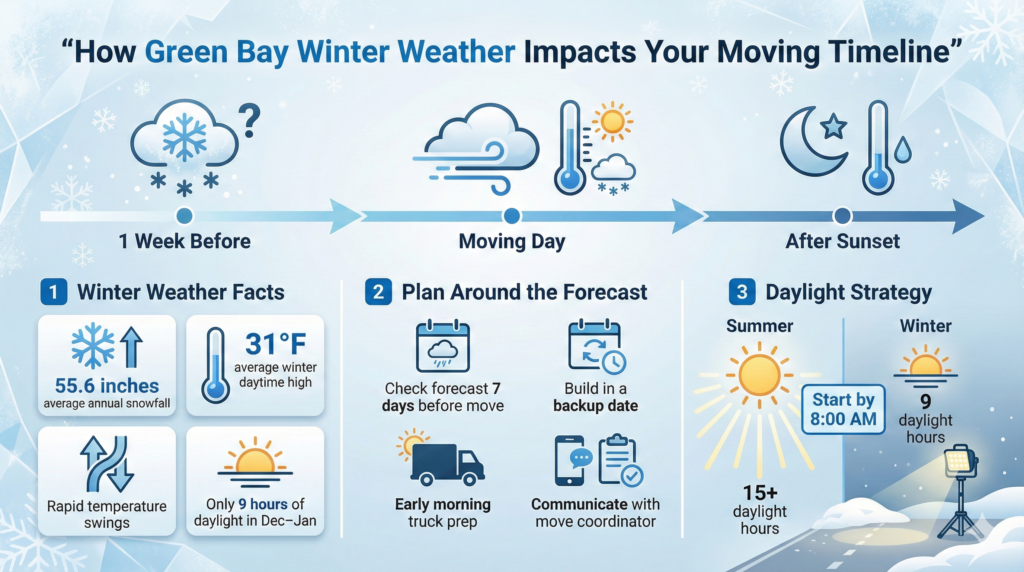
Green Bay’s winters are no joke. According to the Wisconsin State Climatology Office, the city averages 55.6 inches of snow per year based on 1991-2020 climate normals. Weather Spark data shows that winter daily highs hover around 31°F, and temperatures can swing dramatically from one day to the next. That unpredictability means your moving day timeline needs extra flexibility built in.
Plan Around the Forecast
Start checking weather forecasts a full week before your scheduled move. If a major snowstorm or ice event is predicted, talk to your moving company about rescheduling. Most professional movers understand winter delays and can work with you on a backup date. Alex Ploesser, Director of Operations at UniGroup (the parent company of Mayflower), notes that experienced moving crews prepare their trucks the night before in cold weather and start earlier in the morning to ensure everything runs safely. He adds that move coordinators prep customers for what to expect and explain how they can help their movers if difficult conditions arise.
Having a clear plan and a backup date takes the stress out of weather surprises. Use our moving day prep checklist to stay organized.
Shorter Days and Daylight Considerations
Green Bay gets roughly 9 hours of daylight in December and January, compared to over 15 hours in June. That means less time to load, drive, and unload before dark. Plan for an early morning start, ideally by 8:00 AM, so your movers have maximum daylight to work with. If your move runs into the evening, make sure outdoor lighting is working at both locations. Portable LED work lights can be a lifesaver if your new driveway or front path is not well lit.
For a complete planning resource, check out our complete moving checklists page.
Cold-Weather Packing Tips to Keep Your Belongings Safe
Freezing temperatures affect your belongings in ways you might not expect. Plastics become brittle, liquids can freeze and leak, and fragile items like glass and ceramics are more prone to cracking from sudden temperature changes. Taking a few extra packing precautions protects your valuables from cold-weather damage.
Double-Wrapping Fragile Items
Dishes, glassware, mirrors, and picture frames all need extra insulation during a winter move. Wrap each piece individually in bubble wrap, then add an outer layer of packing paper or soft towels. This double layer serves two purposes: it cushions against impact and provides thermal insulation that reduces the risk of cracking from rapid temperature shifts. Use sturdy cardboard boxes instead of plastic totes for fragile items, because plastic containers can crack or shatter in extreme cold.
If you are packing books, documents, or paper items, wrap them in plastic bags before boxing to protect against moisture. Never set cardboard boxes directly on wet or icy ground. Use pallets, tarps, or plastic sheets as barriers. You can find more detailed guidance in our packing and organizing tips from our crew.
Protecting Electronics and Temperature-Sensitive Goods
Electronics and cold weather are a bad combination. Condensation can form inside devices when they move from a freezing truck into a warm house, potentially damaging internal components. Transport electronics in insulated boxes or wrap them in moving blankets for protection. Once inside your new home, let electronics warm up to room temperature for at least two hours before plugging them in.
Liquids like cleaning supplies, paint, and cooking oils can freeze, expand, and leak during a winter move. Pack these items separately in sealed plastic bags inside a sturdy bin, and consider transporting them in your personal vehicle where the heat is running.
Ready for a Stress-Free Winter Move in Green Bay?
Moving in winter takes extra planning, but the payoff is real. You will likely spend less, get more flexibility with scheduling, and work with a crew that has more time and attention to give your move. The keys to a smooth winter relocation are preparation and the right team by your side.
Salt and clear every walkway. Protect your floors with mats, tarps, and cardboard. Plan around the forecast and give yourself a backup date. And when you are ready to make your move, Green Bay Moving Co. is here to help. Our experienced, licensed, and insured crew knows these Wisconsin winters inside and out. We handle the heavy lifting so you can focus on settling into your new home.
Contact Green Bay Moving Co. today for a free quote and let us make your winter move safe, smooth, and stress-free. Whether you are moving across town in Green Bay, over to Appleton or De Pere, or anywhere in the surrounding communities, we have got you covered.
Call us at (920) 819-1545 or visit greenbaymovingco.com to get started.