





When there’s a gap between your closing date and your move-in date, you have three main options: negotiate a rent-back agreement with the seller, use short-term storage for your belongings, or arrange temporary housing. Coordinating with a professional moving team early, like Green Bay Moving Co., gives you the flexibility to adjust your schedule and protect your items during the transition.
According to BestMove.com, more than 1 in 3 homebuyers face a gap between their closing and moving dates. Whether the seller needs extra time or your new home isn’t ready, this guide walks you through every option so you can plan ahead and move with confidence in the Green Bay area.
Key Takeaways
- More than 1 in 3 homebuyers experience a gap between their closing date and actual move-in date, so planning for this possibility is essential
- Rent-back agreements, short-term storage, and temporary housing are the three most common solutions to bridge the gap between homes
- Most rent-back agreements are capped at 60 days after closing due to lender occupancy requirements
- Short-term storage averages around $180 per month in 2025, with options ranging from $70 to $300 depending on size and location
- A professional moving team like Green Bay Moving Co. can coordinate split deliveries, flexible scheduling, and safe storage to keep your move on track
Why Is There a Gap Between Close and Move-In?
A gap between your closing date and your move-in date happens when the legal transfer of property ownership doesn’t line up with the day you can physically move into the home. This is more common than most people expect, and it can range from a few days to several weeks depending on the circumstances of both the buyer and the seller.
According to the Harvard Joint Center for Housing Studies, household mobility fell to a record-low 11.2% in 2024, with just 14.8 million households moving nationwide. With fewer homes on the market and tighter timelines, the chances of a timing mismatch between closing and move-in have increased.
Bob Costello, Chief Economist at the American Trucking Association (ATA), noted that the housing market is showing cautious signs of recovery. He stated that roughly 1 million new single-family homes are expected to be built this year and next, and that “People are going to move a little bit more” as conditions stabilize (Supermove). Even with this optimism, timing gaps remain a reality for many buyers.
Common Reasons Your Dates Don’t Align
Several factors can push your closing date and move-in date apart. According to Banks.com, the most common reasons include:
- The seller needs extra time to relocate and may request a post-closing occupancy period or leaseback arrangement
- Home inspection findings require repairs that the seller must complete before you can move in
- Financing or appraisal delays on either side of the transaction can shift the closing date
- New construction delays on a home being built may push back the completion date past the original closing
- The buyer’s current home hasn’t sold yet, creating a chain reaction that affects the entire timeline
How Long Does the Gap Typically Last?
Most gaps between closing and move-in last anywhere from a few days to about 60 days. According to MoveAdvisor, buyers are generally expected to give sellers 7 to 10 days to vacate the home after closing. In some cases, particularly when the seller has requested a formal rent-back agreement, the gap can stretch to 30 or even 60 days. If you’re buying in a competitive Green Bay or Appleton market, be prepared for the possibility that the seller may need this flexibility.
What Is a Rent-Back Agreement, and Should You Consider One?
A rent-back agreement (also called a leaseback or post-settlement occupancy agreement) is a temporary arrangement where the seller stays in the home after closing and pays rent to the new buyer. It’s one of the most common ways to bridge a gap between closing and move-in, and it can benefit both sides of the transaction.
How Rent-Back Agreements Work
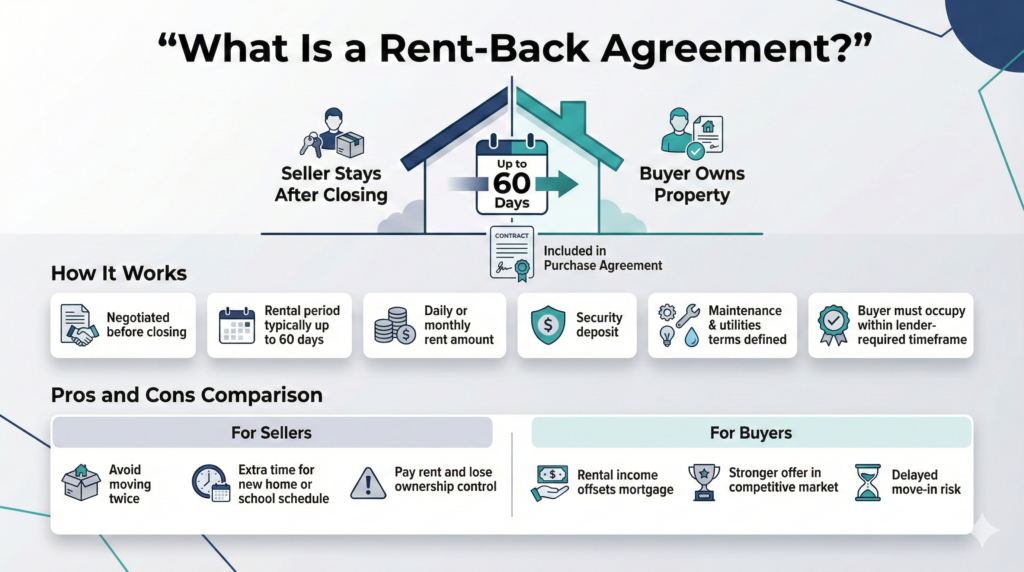
According to Rocket Mortgage, a rent-back agreement is negotiated before closing and included as part of the purchase contract. The key terms typically cover the rental period (usually capped at 60 days), the daily or monthly rent amount, a security deposit, and who handles maintenance and utilities. Sellers generally cannot stay longer than 60 days, because most lenders require the buyer to occupy the home as a primary residence within that window.
Susan Larson, a Real Estate Agent with eXp Realty in Seattle, WA, explained that offering rent-back terms can be a smart move for buyers. She noted that “In a competitive market, buyers need to be flexible” and that a rent-back agreement is something they can offer that provides value without costing them much (Homes.com).
Pros and Cons of Renting Back After Closing
Rent-back agreements have clear advantages, but they also come with risks. Here’s what to weigh:
For Sellers:
- Avoid the cost and hassle of moving twice or into temporary housing
- Extra time to close on a new home, finish the school year, or wait out construction delays
- The rent may be higher than your previous mortgage payment, and you lose ownership control
For Buyers:
- Collect rental income to offset early mortgage payments or closing costs
- Makes your offer more competitive in a tight market
- Delays your move-in and introduces risk if the seller doesn’t vacate on time
Greg Smith, a Real Estate Professional with Boulder Home Source, shared that “A lease-back agreement offers sellers the perfect balance of flexibility and security, allowing them to transition smoothly to their next home without the rush or stress of immediate relocation” (Rate.com).
Comparing Your Options: Rent-Back vs. Storage vs. Temporary Housing
| Option | Best For | Avg. Cost | Duration | Key Risk |
| Rent-Back Agreement | Sellers needing time to relocate | Varies (buyer’s mortgage prorated) | 30-60 days | Seller may not vacate on time |
| Short-Term Storage | Buyers with a gap of 1-8 weeks | $70-$300/month | 1 week to several months | Extra cost and double handling of items |
| Temporary Housing | Families or longer gaps | $100-$250+/night or monthly rentals | Days to months | Added expense and disruption |
How Do You Store Your Belongings Between Homes?
When your move-out date arrives before your new home is ready, short-term storage keeps your belongings safe and organized until you can complete the move. This option is especially helpful in the Green Bay area when closing timelines shift unexpectedly or when you’re waiting on repairs or final inspections.
Short-Term Self-Storage Options
According to a StorageCafe survey, 33% of Americans now rent self-storage units, and online searches for storage rose 8% across the 150 largest U.S. cities in 2024. The growing demand reflects just how common it is for people to need a safe space for their belongings during a move. For a standard Green Bay household, a 10×10 storage unit (100 square feet) is typically large enough to hold the contents of a one- to two-bedroom home.
When choosing a storage facility, look for:
- Climate-controlled units to protect furniture, electronics, and documents from Wisconsin temperature swings
- 24/7 surveillance and gated access for security and peace of mind
- Month-to-month rental options so you’re not locked into a long-term contract
- Drive-up accessibility to make loading and unloading easier on moving day
How Much Does Short-Term Storage Cost in 2025?
According to Outrig’s 2025 pricing guide, the average storage unit in the U.S. costs around $180 per month, with prices ranging from about $70 for smaller units up to $300 or more for larger or specialty spaces. Climate-controlled units typically cost about $10 to $50 more per month. In Wisconsin, prices tend to be slightly below the national average, but summer demand (May through September) can push rates up by 10-15%.
Green Bay Moving Co. crew tip: If you’re using short-term storage between homes, label every box by room and priority level. Mark boxes as “Storage,” “Essentials,” or “New House” so your packing and organizing stays on point when it’s time for the second delivery.
Where Can You Stay During a Gap Between Homes?
If your gap between closing and move-in stretches beyond a few days, you may need a place to stay while your new home is being prepared. For families in Green Bay, Appleton, De Pere, and surrounding Wisconsin communities, there are several practical options that keep costs manageable and stress levels low.
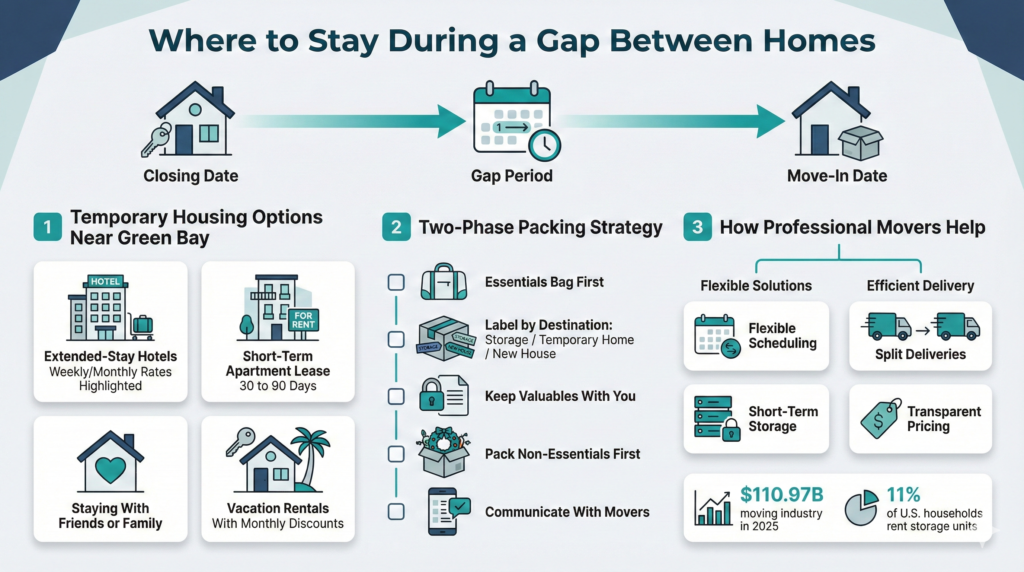
Temporary Housing Options Near Green Bay
- Extended-stay hotels or furnished rentals offer weekly or monthly rates that are significantly cheaper than standard nightly hotel pricing
- Short-term apartment leases through local property managers can provide a comfortable home base for 30 to 90 days
- Staying with family or friends can be the most budget-friendly option, especially for a gap of just a week or two
- Vacation rental platforms often have monthly discounts on homes in the Green Bay area, giving you full kitchen and laundry access
Joel Goldman, a Real Estate Agent in Baltimore, MD, shared practical advice for anyone settling into a new home. He recommended that buyers “Purchase your must-haves and then wait until you move in and feel the energy of the place” before furnishing everything (Homes.com). This advice is especially relevant during a gap, when you’ll want to focus on essentials and avoid buying furniture you might not need.
How to Pack for a Two-Phase Move
When you know there will be a gap between homes, packing strategically saves time, money, and headaches. Here’s a step-by-step approach:
- Pack an essentials bag first. Include toiletries, medications, phone chargers, a change of clothes, and important documents. Check out our guide on what to put in the open-first box for a complete list.
- Separate items by destination. Label boxes clearly as “Storage,” “Temporary Home,” or “New House” to avoid confusion when splitting deliveries.
- Keep valuables with you. Jewelry, personal electronics, passports, and financial documents should travel in your personal vehicle, not on the moving truck.
- Pack non-essentials first. Start with seasonal items, decor, and rarely used kitchen items. Leave daily-use items for last.
- Communicate your plan to your movers. Let your Green Bay Moving Co. crew know which items go to storage and which go to your temporary location so the loading order matches your delivery needs.
How Do Professional Movers Help When Dates Don’t Match Up?
A gap between closing and move-in doesn’t have to derail your plans when you have the right moving team on your side. Professional movers who specialize in flexible scheduling can adapt to shifting timelines, split your belongings into separate deliveries, and provide short-term storage options that keep everything safe and organized.
The moving industry is a massive part of the U.S. economy. According to moveBuddha, the moving services market is expected to reach $110.97 billion in 2025, and over 11% of American households rent storage units. That means the infrastructure is in place to support you during a gap between homes. The key is choosing a local team that understands the unique logistics of your area.
Flexible Scheduling and Split Deliveries
One of the biggest advantages of working with a local company like Green Bay Moving Co. is the ability to adjust your schedule without penalty. If your closing gets delayed or your new home isn’t ready, a flexible moving team can hold your belongings, reschedule your delivery, or split your move into two phases, delivering essentials first and the rest when your home is ready.
According to Supermove’s 2025 industry report, rising fuel and labor costs are the top challenge for 62.2% of moving companies. Working with a trusted local mover who offers transparent pricing protects you from surprise fees when dates shift. If you’re unsure whether your situation calls for professional help, check out our guide on when to call professional movers.
Why Communication With Your Moving Team Matters
The single most important thing you can do when facing a gap between closing and move-in is communicate early and often with your movers. Let them know as soon as you suspect your dates might not align. A good moving company will work with you to create a backup plan, whether that means holding your items on the truck, rerouting to storage, or scheduling a staggered delivery.
If you’re a first-time buyer navigating this for the first time, our first-time homebuyer move-in checklist and moving day prep checklist are great starting points. Both cover the planning details that help you stay organized when timelines are uncertain.
Ready to Bridge the Gap With Confidence?
A gap between your closing date and move-in date can feel stressful, but it doesn’t have to be. With a clear plan, the right temporary housing or storage solution, and a flexible moving team by your side, you can make the transition smooth and stress-free.
Whether you’re moving across Green Bay, relocating from Appleton, or settling into a new home in De Pere or Ashwaubenon, the crew at Green Bay Moving Co. is here to help. We specialize in flexible scheduling, split deliveries, and the kind of calm, organized support that makes even the trickiest timelines manageable.
Need help planning a move with a gap between homes? Contact Green Bay Moving Co. today for a free quote and let’s make your next move a smooth one.