Skip to content








Here is how to load a moving truck: put the heaviest items against the front wall near the cab first, then tall furniture, then boxes from heaviest to lightest, filling the truck in floor-to-ceiling tiers from front to back. Balance weight left and right, and strap each tier as you go. Want trained hands for the heavy part? Book our U-Haul loading help for your rental.
A badly loaded truck causes most DIY moving damage. Boxes slide, dressers tip, and a heavy load in the back makes the truck sway on the highway. The fix is a clear loading order and a few simple rules about weight and straps. This guide walks you through it step by step, with a loading order table you can print. Questions? Call Green Bay Moving Co. at (920) 819-1545.
Key Takeaways: How to Load a Moving Truck
- Heavy first, front first. Appliances and heavy furniture go against the cab wall.
- Build tiers. Fill each section floor to ceiling before moving toward the door.
- Balance the load evenly from left to right, with most weight toward the front.
- Strap every tier with ratchet straps or rope as you finish it.
- Lift smart. Keep boxes well under 50 pounds and use two people for anything heavier.
Get Ready Before You Load
Good loading starts before the truck arrives. A little prep makes the day faster and safer.
Gather Your Loading Supplies
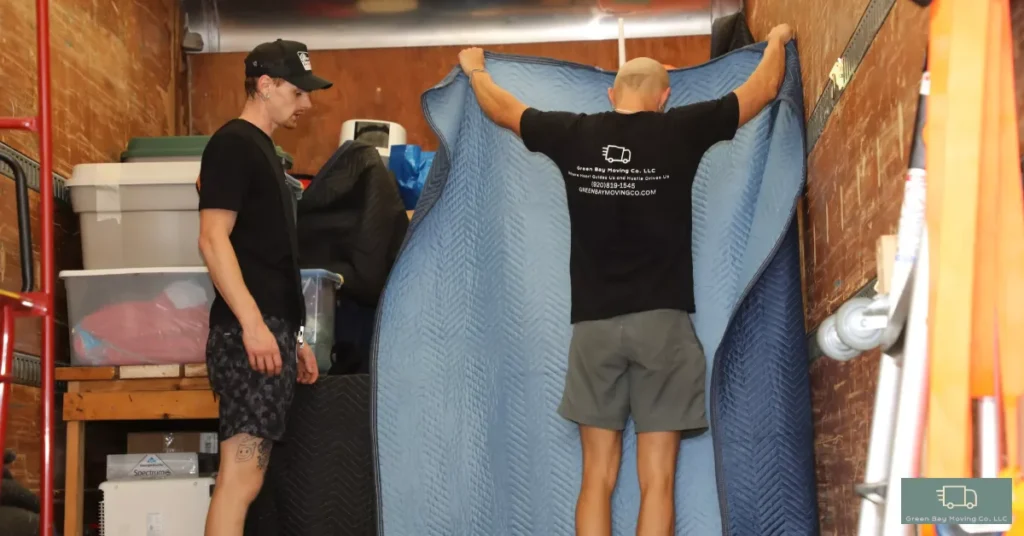
- Furniture pads or moving blankets to protect wood and finishes
- Ratchet straps or rope to tie off each tier
- A furniture dolly and a hand truck for heavy pieces and box stacks
- Stretch wrap to keep drawers and doors shut
- Mattress bags to keep beds clean
- Work gloves and closed-toe shoes with good grip
Stage Everything Near the Door
Group boxes by weight in your garage or front room. Take apart bed frames and table legs, and bag the hardware. Empty and secure appliances ahead of time. Unplug the fridge a day early so it can defrost and dry.
Plan Your Crew
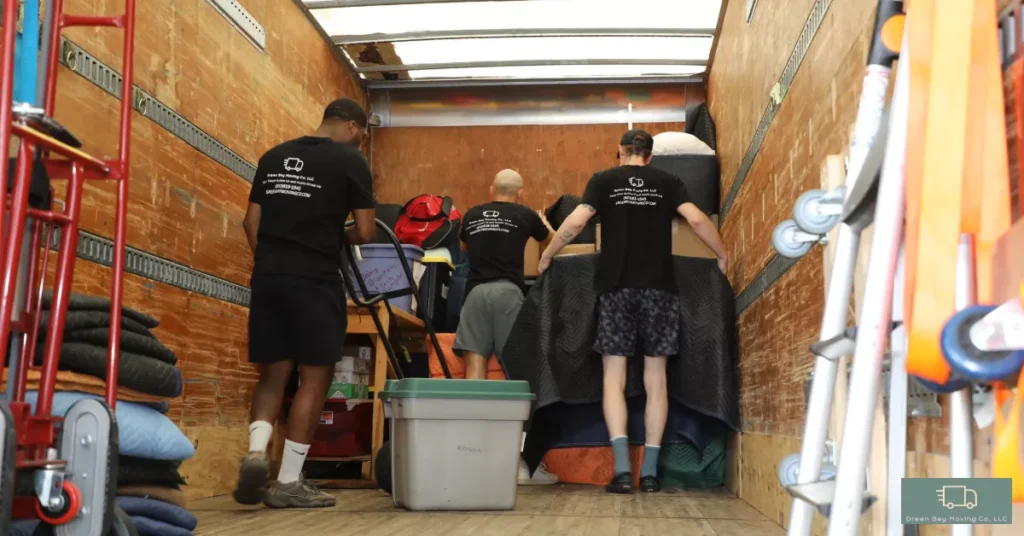
Most homes need at least two strong people at all times. One person stays in the truck to stack while others carry. If you only need help with this part, our guide on hiring labor-only movers explains when it makes sense.

The Right Order to Load a Moving Truck
The loading order is the heart of the job. Follow it and your load stays stable from the first box to the last.
| Load order | What goes in | Where it goes |
|---|---|---|
| 1 | Appliances: fridge, washer, dryer, freezer | Against the front wall, upright |
| 2 | Heavy furniture: dressers, desks, cabinets | Front section, against the walls |
| 3 | Mattresses and box springs | Standing on edge along the side walls |
| 4 | Sofas and large upholstered pieces | On end if possible, pads on all sides |
| 5 | Heavy boxes: books, tools, kitchen | On the floor, filling each tier |
| 6 | Medium boxes and small furniture | Stacked on heavy boxes |
| 7 | Light boxes, lamps, cushions | Top of each tier and gaps |
| 8 | Moving day essentials and tools | Last in, near the door |
Keep valuables, documents, and medicine out of the truck entirely. Ride with them in your car.
How to Load a Moving Truck, Step by Step
- Load appliances first. Roll them in on a dolly and stand them upright against the front wall. Strap them to the rails.
- Add heavy furniture. Place dressers and cabinets against the front and side walls. Pad every surface.
- Stand mattresses on edge. Run them along a side wall. They act as a cushion for the rest of the load.
- Set the sofa. Stand it on end if it fits. If not, lay it flat and stack only light boxes on it.
- Build the first tier. Fill the space between big items with heavy boxes on the floor and lighter boxes above, up to the ceiling.
- Fill the gaps. Stuff pillows, bags of linens, and cushions into empty spaces so nothing shifts.
- Strap the tier. Run a strap across the full width of the truck and tighten it.
- Repeat toward the door. Build the next tier the same way until the truck is full.
- Load the last items. Put the boxes you need first right at the door.
Halfway through and running out of energy? Our crew can step in. Call (920) 819-1545 for loading help, any day from 7am to 10pm.
How to Balance the Weight in a Moving Truck
Weight placement affects how the truck drives. Too much weight in the back makes the front end light, which hurts steering and braking. Too much on one side makes the truck lean in turns.
- Keep most of the weight toward the front, near the cab.
- Split heavy items evenly between the left and right sides.
- Keep heavy items low. Never stack a heavy box on a light one.
- Don’t leave a heavy item alone in the back of the truck.
- Use the space over the cab for light, fragile items only.
How to Tie Down Your Load
Straps keep each tier from sliding when you brake or turn. Most rental trucks have tie-down rails along the walls. Run a ratchet strap or rope across each tier and tighten it until the load feels solid.
How strong should your straps be? The federal cargo securement rules for commercial trucks require the working load limit of all tie-downs to add up to at least half the weight of the cargo. Those rules are written for commercial carriers, not rental customers. Still, they make a smart benchmark. If a dresser weighs 200 pounds, aim for straps rated for at least 100 pounds holding it.
Check your straps after the first few miles. Loads settle quickly, and a strap that was tight in the driveway can loosen by the first stoplight.

Lift Safely While You Load
Loading a truck means hundreds of lifts. That is where most moving injuries happen. Material movers know this well. The Bureau of Labor Statistics reported 64,930 injury cases with days away from work for hand laborers and material movers in 2020. About 10,810 of those came from overexertion while lifting or lowering.
NIOSH manual handling guidelines say the most weight to lift with two hands, under ideal conditions, is 51 pounds. Moving days are rarely ideal. Follow these rules:
- Keep boxes under 40 pounds when you can.
- Bend at the knees and keep the load close to your body.
- Turn with your feet, not your back.
- Use a dolly for anything heavy and two people for anything awkward.
- Watch the ramp. Walk forward, keep it clear, and dry it if it is wet or icy.
Some items should not be a DIY job at all. Pianos, gun safes, and anything over 300 pounds need the right equipment. Our heavy item moving service handles those with a lift gate and a trained crew.
Common Loading Mistakes to Avoid
- Loading boxes first. Big items then have nowhere to go.
- Leaving gaps. Empty spaces let the load shift and fall.
- Skipping pads. Wood rubbing on wood scratches fast.
- Overloading one side. The truck leans and handles poorly.
- Not strapping tiers. One hard stop can topple a wall of boxes.
- Rushing in bad weather. Green Bay winters mean icy ramps and slick driveways. Salt the path first.
How to Unload the Truck at Your New Home
Unloading is the loading process in reverse, with one extra step. Before the first box comes off, walk through the new home and tape a room name on each door. Then unload from the back of the truck to the front. Boxes come off first, then sofas and mattresses, and the heavy appliances last. Place every box in its labeled room so you are not moving it twice. Loosen straps one tier at a time, since a load can shift during the drive.
How to Load a Moving Truck: Common Questions
What do you load first in a moving truck?
Load the heaviest items first: the refrigerator, washer, dryer, and large furniture. Place them against the front wall near the cab. Then add mattresses and sofas along the sides, and fill the rest with boxes from heaviest to lightest.
Is it faster to load or unload a truck?
Unloading is usually faster. Loading takes planning, stacking, and strapping. Unloading is mostly carrying. For many homes, unloading takes about half to two-thirds of the loading time.
How long does it take to load a moving truck?
It depends on the size of the home and the crew. A small apartment may take one to two hours with two people. A three-bedroom house can take four to six hours or more. Our guide to loading and unloading pricing explains how time and crew size affect cost.
Should mattresses go flat or on their side in a truck?
On their side, standing up along a wall. This saves floor space and keeps them from being crushed. Wrap them in mattress bags first to keep them clean.
How do you keep things from shifting in a moving truck?
Pack tightly, fill every gap with soft items, and strap each tier across the full width of the truck. Check and retighten straps after the first few miles.
Get Your Truck Loaded Right in Green Bay
A well-loaded truck comes down to order, balance, and straps. Heavy items go first at the front, each tier gets filled floor to ceiling, and every tier gets tied off. Lift smart and take breaks.
Rented a truck or a container and want pros for the heavy lifting? Green Bay Moving Co. is family-owned, and the owners are on-site for every move. We give free in-person and phone estimates with no hidden fees. Call (920) 819-1545 or book loading help today. We are open 7am to 10pm, seven days a week.