Skip to content






Moving scams happen when dishonest operators use lowball quotes, vague contracts, or fake company names to overcharge you or hold your belongings hostage. The best way to protect yourself is to verify licensing, demand written estimates, and hire a local moving company with a real presence in your community. Here is how to spot the warning signs before it is too late.
Key Takeaways
- About 1 in every 4,000 U.S. moves results in a reported scam complaint, and experts estimate thatonly 5-10% of moving fraud is ever reported
- The most common scams include hostage goods schemes, bait-and-switch pricing, and vanishing movers who disappear with your deposit
- Red flags include phone-only quotes with no home walkthrough, demands for large cash deposits, missing U.S. DOT numbers, and generic company names
- Choosing a licensed local mover with verifiable community roots is one of the most effective ways to avoid moving fraud
What Is a Moving Scam and How Common Are They?
Moving scams happen more often than most people realize. In 2024, the Better Business Bureau received over 100,000 inquiries about movers and logged 718 formal complaints against moving companies across the country. The median amount lost per scam was$431 per incident in the first half of 2024, a 23% jump over the year before. With roughly 35 million Americans moving each year, the pool of potential victims is enormous.
How to Spot a Moving Scam
Types of Moving Fraud
Moving scams generally fall into a few predictable patterns:
- Hostage goods: The mover loads your belongings onto the truck, then demands thousands more than the original quote before unloading. You are stuck choosing between paying up or losing your possessions.
- Bait-and-switch: A company gives you an unrealistically low estimate to win your business, then inflates the price on moving day when it is too late to hire someone else.
- Vanishing movers: A fake company collects your deposit and disappears. Your calls go unanswered, and your money is gone.
In 2023, the FMCSA launched Operation Protect Your Move, a nationwide crackdown that conducted 62 investigations and addressed 380 household goods complaints, including 128 cases involving hostage possessions.
The Difference Between a Moving Company and a Moving Broker
One of the biggest sources of confusion is the difference between an actual moving company and a moving broker. According to the FMCSA, a broker does not own trucks or employ movers. Brokers are essentially sales teams that book your move and then sell the job to a third-party carrier.
This matters because if something goes wrong, the broker often takes no responsibility for damaged or missing items. Many scam complaints originate from customers who unknowingly hired a broker instead of a mover. Always ask directly: “Do you own the trucks, or are you a broker?”

What Are the Biggest Red Flags of a Fraudulent Mover?
Scam movers follow a playbook. Once you know the patterns, the warning signs become easy to spot. If you are already thinking about tips for avoiding theft during your move, watch for these red flags as your first line of defense.
Lowball Estimates Without a Home Walkthrough
A legitimate moving company will want to see your belongings before quoting a price, either in person or through a virtual walkthrough. Scammers skip this step entirely. They offer a suspiciously low number over the phone to win your business, then increase costs dramatically once your items are loaded. The FMCSA requires movers to provide estimates based on a physical survey of your household goods unless you waive that requirement in writing.
Demands for Large Cash Deposits Upfront
Reputable movers typically request a small deposit of 10-20% to hold your date, and they accept credit cards or other traceable payment methods. A company asking for 50% or more in cash before your move is a major warning sign. Once scammers have your cash, they have very little incentive to follow through.
No U.S. DOT Number or Licensing Information
Every interstate mover must be registered with the FMCSA and carry a U.S. DOT number. If a company cannot provide this number, or if the number does not check out in the FMCSA database, walk away. Legitimate movers display this information proudly on their trucks, website, and contracts.
Generic Phone Greetings and No Physical Address
If someone answers the phone with just “movers” or “moving company” instead of a specific business name, that is a red flag. Scam operations frequently change their names to dodge bad reviews and regulatory action. A real company has a physical address, a consistent name, and a verifiable history in the community.
How Do You Verify a Moving Company Is Legitimate?
Taking 15 minutes to research your mover before signing anything can save you thousands of dollars and months of stress. Use our complete moving checklists alongside these verification steps.
Check the FMCSA Mover Database
Visit the FMCSA’s Protect Your Move website and search by company name or DOT number. You can view complaint history, insurance status, and whether the company is authorized to transport household goods. This free tool is one of the most powerful resources available to consumers.
Read Reviews on Third-Party Sites
Check Google, Yelp, and the Better Business Bureau for reviews. Look for specific details about the moving experience rather than just star ratings. If a company has no reviews at all, recently created web pages, or a pattern of complaints describing the same problems, consider it a warning.
Request a Written, Binding Estimate
A binding estimate locks in your price based on the inventory and services agreed upon. Non-binding estimates are only approximations, and your final bill could be higher. Federal law requires that movers charge no more than 110% of a non-binding estimate at delivery. Always get everything in writing before moving day.
Why Are Local Moving Companies Safer Than Online-Only Operations?
When you are deciding when to call professional movers in Green Bay, choosing a local company with real roots in the community is one of the smartest moves you can make. Here is why.
Community Reputation and Accountability
Local movers depend on word-of-mouth referrals and their standing in the neighborhoods they serve. A company based in Green Bay, Appleton, or De Pere cannot afford to scam a customer and expect to stay in business. Their reputation is everything. Online-only operations, by contrast, can change their name and website overnight to escape bad reviews.
Personalized Service and Local Knowledge
A local crew knows the streets, the traffic patterns, the parking restrictions, and the building layouts in your area. They are not reading off a call center script from across the country. You are more likely to speak directly with the owner or a crew leader who is personally invested in making your move go smoothly.
Transparent Pricing with No Middleman
When you hire a local moving company, you are working directly with the people who will handle your belongings. There is no broker taking a cut or selling your job to the lowest-bidding carrier. Local movers typically charge straightforward hourly rates and give you an honest, face-to-face estimate. If you are weighing your options, our breakdown of the pros and cons of DIY vs. full packing service can help you decide what level of support makes the most sense.
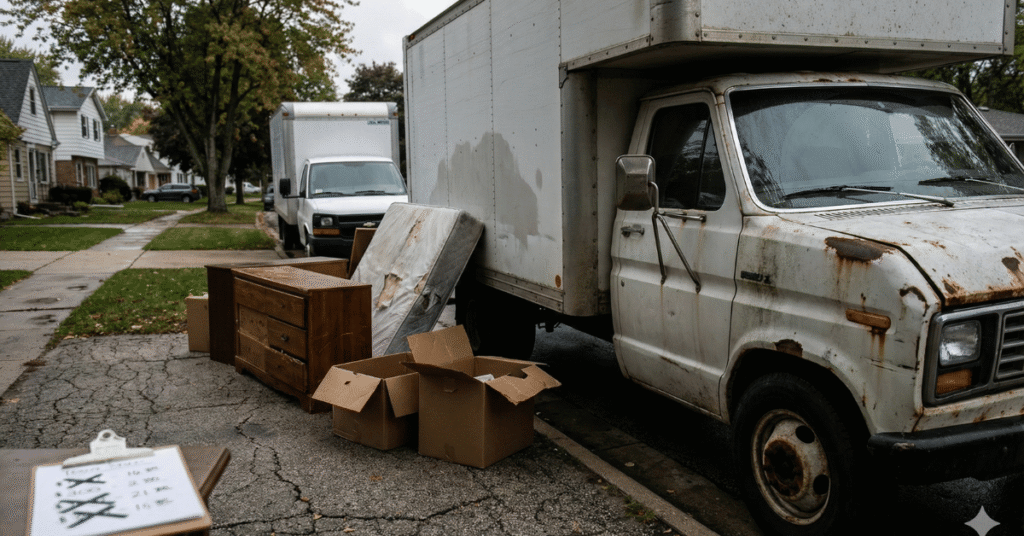
What Should You Do If You Think You’ve Been Scammed?
If you suspect a moving scam is happening, act quickly. The sooner you document and report the situation, the better your chances of getting help.
Document Everything and Contact Law Enforcement
Save all texts, emails, contracts, and receipts. Take photos of your belongings before the movers load them. If a mover is holding your items hostage, the BBB recommends contacting local police to file a report, even if they treat it as a civil matter. Having an official record strengthens any future legal claim.
File Complaints with the BBB and FMCSA
Report the company to the Better Business Bureau’s Scam Tracker and to the FMCSA at 1-888-368-7238 or through ProtectYourMove.gov. The FMCSA can fine a company up to $10,000 per day for illegally holding household goods hostage. Your complaint also helps protect the next family from the same scam.
Ready for a Safe, Stress-Free Move in Green Bay?
Moving scams are real, but they are also avoidable. By verifying licensing, reading reviews, insisting on written estimates, and choosing a local mover with genuine community roots, you can protect your belongings and your wallet.
At Green Bay Moving Co., we are a licensed, insured, locally owned team that has helped families across Green Bay, Appleton, De Pere, and surrounding Wisconsin communities move with confidence. We show up with our own trucks, our own crew, and honest pricing with no surprises.
Ready to see why families choose Green Bay Moving Co.? Give us a call or request your free estimate today. Let’s make your next move a smooth one.